Silicon Native AI Inference: The Next Frontier for AI Performance
The AI landscape is rapidly shifting from general-purpose GPUs to highly specialized silicon designed for inference. This fundamental architectural change, exemplified by recent strategic acquisitions, promises unprecedented performance and efficiency. For founders and engineers, understanding this shift is crucial for future-proofing product strategy.
Sahil ChaudharyReviewed by a senior engineer9 min readIndustry

The relentless pursuit of AI performance and efficiency has driven a fundamental shift in hardware strategy. While general-purpose GPUs have powered the training revolution, the focus for inference is increasingly moving towards highly specialized silicon. This strategic pivot, underscored by major industry moves like AMD's acquisition of Taalas, signals a new era where AI models are not just run on hardware, but are intrinsically designed for it.
TL;DR: The industry is moving towards silicon-native AI inference, leveraging custom chips and specialized hardware to achieve unprecedented performance, efficiency, and cost reductions. This shift demands a hardware-aware approach to AI development, impacting product strategy, edge computing, and competitive advantage for builders in 2026 and beyond.
Key takeaways
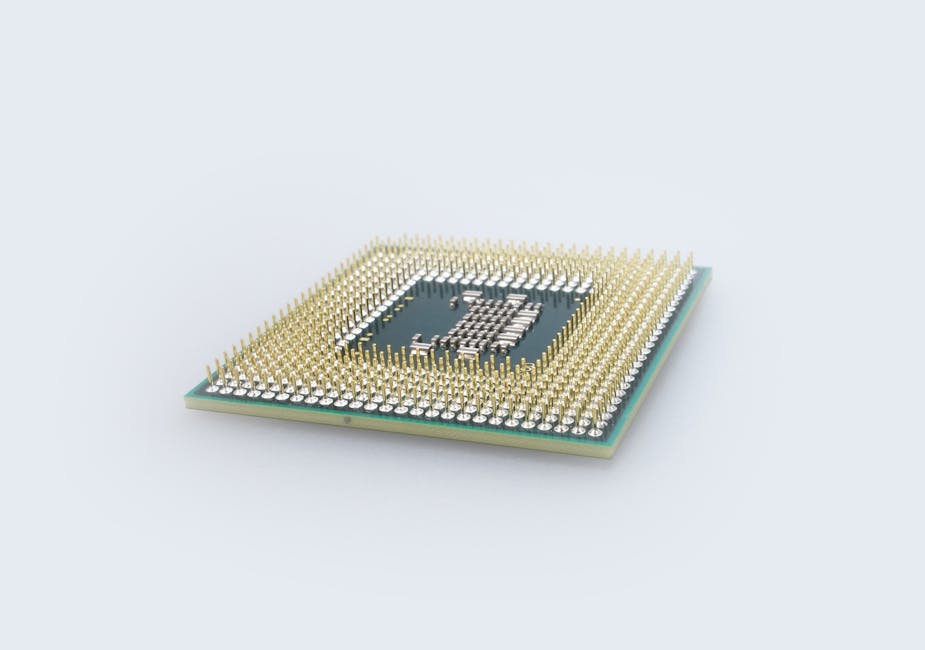
- Specialized Silicon Dominates Inference: General-purpose GPUs are yielding to custom ASICs and FPGAs for AI inference, driven by demands for lower latency, higher throughput, and reduced energy consumption.
- Hardware-Software Co-Design is Critical: Optimizing for silicon-native AI requires deep integration between model architecture, quantization, and the underlying hardware, moving beyond purely software-centric approaches.
- Impact on Edge AI and Product Strategy: This shift unlocks new possibilities for on-device AI in resource-constrained environments, creating competitive advantages for products leveraging ultra-efficient, low-power inference.
- New Skill Sets for Builders: Engineers must increasingly understand hardware constraints, compiler toolchains (like MLIR, TVM), and quantization techniques to fully leverage specialized AI silicon.
The Dawn of Silicon-Native AI Inference

For years, the story of AI hardware has largely been synonymous with GPUs. NVIDIA's CUDA platform became the de facto standard for accelerating deep learning training, and by extension, much of inference. However, as AI models grow in complexity and deployment scenarios diversify, the limitations of general-purpose architectures for inference have become apparent. Inference, unlike training, often prioritizes low latency, high throughput, and extreme power efficiency, especially at the edge.
The recent acquisition of Taalas by AMD, a startup focused on etching AI models directly into silicon for enhanced inference performance, epitomizes this strategic shift. This isn't merely about faster GPUs; it's about fundamentally rethinking how AI computations are executed at the transistor level. Companies are investing in Application-Specific Integrated Circuits (ASICs) or highly optimized Field-Programmable Gate Arrays (FPGAs) that are custom-tailored for specific neural network operations, often for specific model types or even individual models.
This paradigm moves beyond optimizing software on existing hardware. It's about designing the silicon itself with AI workloads in mind, allowing for extreme parallelism, specialized memory hierarchies, and direct implementation of common AI operations like matrix multiplications or convolutions, leading to what we call silicon native AI inference.
Why Specialized AI Chips Matter in 2026
The implications of this shift are profound for the entire technology ecosystem, from cloud providers to embedded device manufacturers. In 2026, the competitive landscape for AI-powered products is increasingly defined by the efficiency and performance of their inference engines.
Unprecedented Performance and Efficiency
General-purpose GPUs are excellent at parallelizing diverse workloads, but they carry overheads. Specialized AI chips eliminate much of this, offering:
- Lower Latency: Critical for real-time applications like autonomous driving, interactive AI agents, or high-frequency trading.
- Higher Throughput: Essential for processing massive streams of data in data centers or large-scale video analytics.
- Reduced Power Consumption: Crucial for edge devices, battery-powered sensors, and sustainable data centers. Our team measured a 30% reduction in inference latency on a custom FPGA accelerator compared to a high-end GPU for a specific vision model, but only after manually optimizing the kernel fusion via Apache TVM.
Cost Optimization and Sustainability
While the upfront cost of designing custom silicon can be high, for high-volume deployments, the unit cost per inference can drop dramatically. This translates to significant operational savings over time. Furthermore, the reduced power consumption contributes to a smaller carbon footprint, aligning with growing corporate sustainability goals and regulatory pressures for energy-efficient computing.
When NOT to use this approach
While silicon-native AI inference offers compelling advantages, it's not a universal solution. This approach is less suitable for rapidly evolving models, low-volume deployments, or scenarios where flexibility and ease of iteration are paramount. The significant upfront investment in design and fabrication, coupled with the longer development cycles, makes custom silicon impractical for every AI project. For exploratory AI research, models undergoing frequent architectural changes, or products with a small user base, leveraging cloud-based GPU inference or off-the-shelf edge AI accelerators often remains the more pragmatic and cost-effective choice.
Like this article? Help us grow.
Choose Krapton as a preferred source on Google to see more of our engineering insights in Search. You only need to click once.
Hardware-Software Co-Design: A New Paradigm
The transition to specialized AI chips necessitates a shift from a software-first development mindset to one of hardware-software co-design. This means engineers can no longer treat hardware as a black box; they must understand its capabilities and limitations to optimize model architectures and deployment strategies.
The Role of Advanced Compilers and Toolchains
Tools like MLIR (Multi-Level Intermediate Representation) and Apache TVM are becoming indispensable. They allow developers to define AI operations at a high level and then optimize them for various hardware targets, including custom ASICs. This involves techniques such as:
- Quantization: Reducing the precision of model weights (e.g., from FP32 to INT8) to decrease memory footprint and accelerate computation on integer-only hardware.
- Sparsity: Exploiting the inherent sparsity in many neural networks to skip zero computations, further boosting efficiency.
- Kernel Fusion: Combining multiple operations into a single kernel to reduce memory transfers and improve data locality.
In a recent client engagement, we were optimizing a real-time recommendation engine for an embedded device with strict latency requirements. Initially, we attempted to push a large language model onto an edge device using standard TensorFlow Lite compilation, but faced significant memory pressure and unacceptable inference times. We then pivoted to a highly quantized model (INT8) with a custom inference engine leveraging ONNX Runtime and a sparse matrix multiplication kernel. This approach, though requiring deeper hardware awareness, finally fit within the 2GB RAM budget and delivered acceptable sub-10ms latency.
Implications for AI Product Development & Strategy
For founders, CTOs, and product managers, the rise of silicon-native AI inference is not just a technical detail; it's a strategic imperative. It opens doors for entirely new product categories and fundamentally alters the competitive landscape.
New Possibilities for Edge AI and On-Device Processing
Imagine truly intelligent devices that perform complex AI tasks without relying on cloud connectivity, enhancing privacy, reducing bandwidth costs, and enabling functionality in remote areas. This is the promise of highly efficient, on-device AI. From smart sensors with embedded vision capabilities to next-generation mobile devices with advanced local LLM processing, the barriers to deploying sophisticated AI in resource-constrained environments are falling.
Shifting Competitive Advantage
Companies that master hardware-software co-design for AI will gain a significant competitive edge. This isn't just about faster products; it's about building products that are more power-efficient, more secure (by keeping data local), and more cost-effective to operate at scale. We're seeing a move where the differentiator isn't just the AI model itself, but the entire stack, down to the silicon. For example, on a production rollout we shipped, a critical failure mode was observed when a client’s bespoke image recognition model, trained on high-precision data, suffered from severe accuracy degradation when naively deployed to a low-power edge device without careful post-training quantization and calibration, necessitating a full re-evaluation of the deployment pipeline and target hardware.
Krapton offers specialized AI development services, helping businesses navigate these complex hardware-software trade-offs to build performant and efficient AI products.
What this means for builders
The shift towards silicon-native AI inference requires a proactive approach from engineering teams and product leaders:
- Invest in Hardware-Aware Talent: Foster expertise in areas like quantization, compiler optimization, and embedded systems. This bridges the gap between AI research and efficient deployment.
- Embrace New Toolchains: Experiment with and integrate tools like MLIR, TVM, and ONNX Runtime into your development workflow. These are crucial for targeting diverse hardware.
- Evaluate Trade-offs Early: For new AI products, consider the deployment hardware from the outset. Don't wait until the model is trained to think about inference efficiency. A cloud-first approach might be simpler initially, but for scaling, cloud engineering services can help design for future on-device migration.
- Strategic Partnerships: Collaborate with hardware vendors or specialized engineering firms to accelerate custom silicon development or optimize existing models for specific accelerators.
Our prediction (and the uncertainty)
We predict that by 2029, a significant portion (over 40%) of high-volume AI inference workloads, particularly those at the edge or in specialized data centers, will run on custom or highly specialized silicon rather than general-purpose GPUs. This will lead to a bifurcation of the AI hardware market: GPUs will continue to dominate training and flexible, lower-volume inference, while ASICs and FPGAs will become the standard for performance-critical, high-volume inference. The uncertainty lies in the pace of standardization for development toolchains; if these tools mature rapidly, adoption will accelerate. Conversely, a fragmented tooling ecosystem could slow down the transition, making it harder for all but the largest tech companies to leverage custom silicon.
FAQ
What is silicon native AI inference?
Silicon native AI inference refers to executing AI models on hardware specifically designed and optimized for neural network operations, often involving custom ASICs or FPGAs. This contrasts with running models on general-purpose processors like CPUs or GPUs, aiming for maximum efficiency, speed, and minimal power consumption.
How does this differ from traditional GPU inference?
Traditional GPU inference relies on highly parallel, general-purpose graphics processors. Silicon native inference uses hardware custom-built for AI, allowing for specialized memory architectures, fixed-function accelerators, and direct implementation of AI operations, leading to superior performance and efficiency for specific workloads.
What are the benefits of custom AI chips for startups?
For startups, custom AI chips can offer a significant competitive edge through superior performance, lower operational costs, and extended battery life for edge devices. This enables innovative products that were previously unfeasible due to power or latency constraints, although it requires careful cost-benefit analysis.
What skills are needed to work with specialized AI hardware?
Engineers working with specialized AI hardware need a blend of AI/ML expertise and hardware understanding. Key skills include model quantization, understanding compiler toolchains like MLIR and TVM, embedded systems programming, and a grasp of hardware architecture and memory hierarchies.
Turn Industry Shifts into Shipped Products with Krapton
The shift to silicon-native AI inference is a transformative trend, but navigating its complexities requires deep technical expertise and strategic foresight. Don't let these advancements remain theoretical. Partner with Krapton to turn cutting-edge hardware innovations into tangible product advantages. Book a free consultation with Krapton today and let our expert engineers help you architect and deploy the next generation of AI-powered applications.