Product and strategy
AI MVP development that tests the idea with real users
We build the first release of an AI product around the question your business most needs answered, measure it from launch, and leave you a codebase that grows into version two instead of being rewritten.
01 /
What makes an AI MVP different
- OpenAI
- Claude
- Gemini
- LangChain
- Next.js
- React Native
- Node.js
- Python
- Supabase
- PostgreSQL
- Stripe
- Vercel
A conventional MVP tests whether people want the product. An AI MVP has to test that and one more thing: whether the model does the job well enough, often enough, at a price the business model can absorb. A demo built on hand-picked examples cannot answer that. Real users, real inputs and a way to measure the output can, and that is what the first release is designed to provide.
Krapton keeps the first release to a single core journey and builds it from parts already proven in production, so the new work goes into the AI feature itself. Around it we add what decides whether users come back: sign-in and permissions, a graceful fallback when the model is unsure, usage limits, and billing if you plan to charge from launch.
We also build and run AI products of our own, from a mobile assistant that answers from cited sources to a desktop race engineer in public beta. The same habits carry over to client work: measure cost per request early, keep a test set of real inputs, and let usage decide what goes into the next release.
02 /
AI products we launch as MVPs
The common thread is a task where the model does real work for the user, and where a first release can show whether it does that work well.
Vertical assistants
An assistant for one profession or task that answers from a curated knowledge base and shows its sources, so early users can check answers and you can see where it falls short.
Document-heavy products
Tools that read contracts, forms, invoices or reports, pull out the fields a workflow needs, and send low-confidence results to a person for review instead of guessing.
Workflow copilots
A copilot inside an existing process that prepares routine work for a person to approve, which reveals the steps users trust enough to automate in a later release.
Search and discovery
Search that understands plain-language requests across a catalog, archive or marketplace, ranks results with a short reason for each, and logs failed searches as product research.
Image analysis products
Apps that analyze a photo or scan and return findings a non-expert can understand, with the confidence of each finding shown and clear advice on when to see a professional.
AI modules for existing SaaS
A new AI-powered module for a product that already has customers, released to a subset of accounts so adoption, quality and cost can be measured before a wider rollout.
03 /
What the MVP includes
Scope and success measures
A written scope for the first release, the assumption it tests, and the usage and quality levels that will count as a pass.
The working product
A web or mobile app with sign-in, the core AI journey, an admin view and billing where needed, deployed to production on your accounts.
Evaluation set
Real example inputs with expected results, run against every prompt or model change so quality is measured rather than assumed.
Usage, quality and cost dashboards
Who uses the feature, how often its output is accepted or corrected, and what each request costs, all visible from launch day.
Evidence-based roadmap
A review of what users did, where the model struggled and what it cost, turned into a prioritized list for the next release.
Code and accounts you own
The repository, cloud accounts and documentation, set up in your name so your own engineers or another team could take over.
04 /
From idea to first release
A short discovery, then a build in short cycles with a working version you can try each week.
01
Discovery
We work out who the product is for, what the AI does for them, which assumption carries the most risk and what a good answer looks like in practice, then return a prioritized scope with a fixed quote for the first release.
02
Test the model first
Before any screens are built, we run candidate models against real examples to confirm the core task is feasible at an acceptable cost per request. If it is not, you learn that while changing course is still cheap.
03
Build in short cycles
The core journey, sign-in, the AI feature and admin tools are built in short iterations with a demo each week, so early versions can go in front of trusted users and be adjusted.
04
Launch and measure
We ship to production with analytics, quality tracking and cost monitoring in place, review early usage with you, and turn what we learn into the plan for version two.
05 /
Cost, data and trust at launch
An AI product's running cost rises with every active user, which a conventional MVP rarely has to plan for. We model cost per request during discovery, then design pricing tiers, rate limits and caching so heavier use brings in more revenue rather than only more expense. Early users also need honest signals: labels that show when content is generated, visible sources where answers depend on facts, and an easy way to report a bad result.
Personal data in prompts, uploads and logs is handled under the privacy law that applies to your users, so data flows, retention and each model provider's terms are agreed with you before launch. Products in regulated fields such as health, finance or law get extra review steps and clear limits on what the product may advise, with a route to a qualified professional.
06 /
From our work
- Available
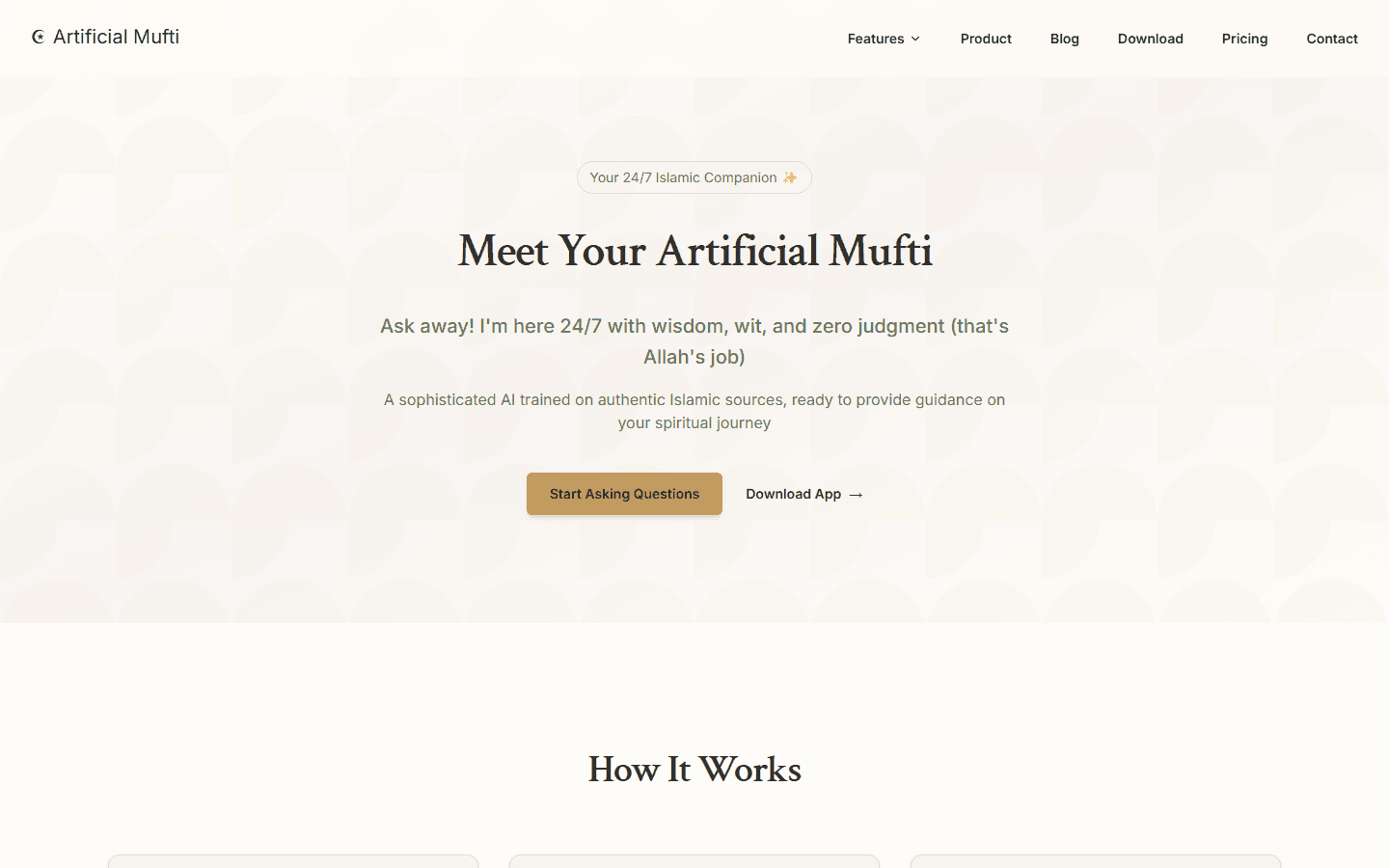
Artificial Mufti
Islamic guidance, powered by AI — instant answers, prayer tools, and Quranic wisdom on your phone.
- AI Mufti chatbot with source-backed answers
- GPS prayer times with Athan alerts
- Qibla direction finder via compass
AI Product / AI / Islamic
- Beta
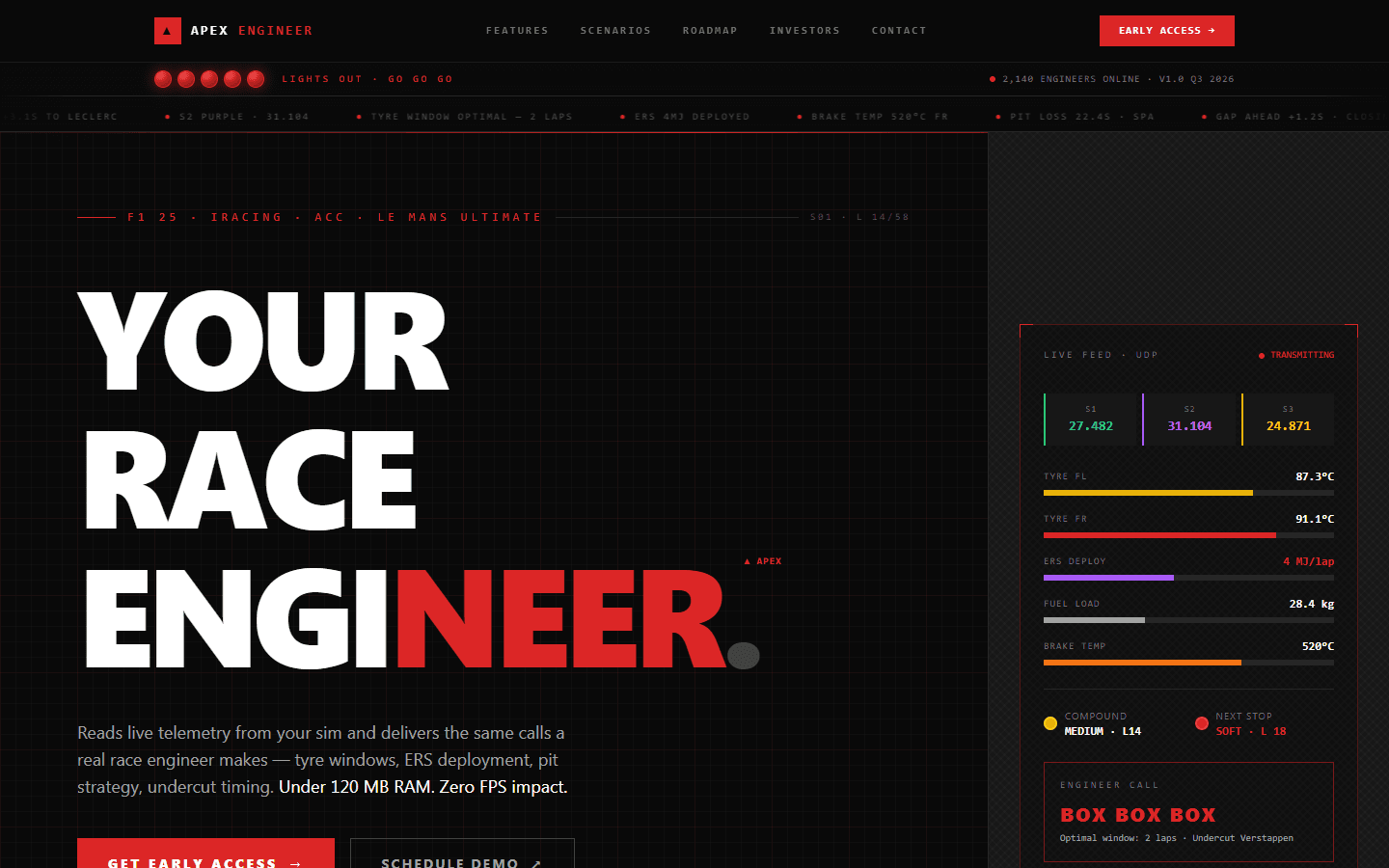
Apex Engineer
Your personal F1 race engineer — live strategy, setups, and split-second calls while you drive.
- Live race strategy calls (push, save, box)
- ERS / battery deployment guidance per corner
- Track-specific setup recommendations
AI Product / AI / Tauri
07 /
Related services
Build AI-powered application
You want an app where AI is the product — not a chatbot bolted on, but a core feature.
Startup & MVP services
For startups looking to launch fast, our MVP services provide a swift, efficient, and cost-effective route to market, ensuring your idea gets the validation it needs.
Create SaaS platform
You have a SaaS idea (or an internal tool ready to externalise) and you need the v1 in months, not quarters.
Build RAG chatbot
You've seen the demos but your data is messy, multi-source, and updates daily.
AI consulting and strategy
Find the AI use cases worth building, and plan them.
Generative AI development
Text, image and code generation inside your product.
08 /
Frequently asked questions
What does it cost to build an AI MVP?
The main drivers are the platforms you need, how much data preparation the AI feature requires, the systems it connects to and whether you charge users from launch. A single-purpose assistant costs less than a product that reads documents and acts in several tools. Discovery ends with a fixed quote for a defined scope and an estimate of monthly model spending at the usage you expect.
How long does an AI MVP take to build?
That depends on scope and on how ready your data is, so we give a schedule after discovery rather than a number up front. How the time is used stays the same: feasibility testing of the model comes first, a working version is available to try early, and weekly demos keep the scope honest as launch approaches.
Which AI model should our MVP use?
We decide with a test, not a preference. Candidate models from the main providers, plus an open-weight model if data must stay private, are run on the same set of real inputs and compared on accuracy, speed and cost per request. The product reaches the model through its own interface, so revisiting the choice after launch is a small, contained change.
Do we need our own data before building an AI MVP?
Not always. Many first releases work from public knowledge, licensed content or a small curated set you prepare with us, then improve as real usage creates data. What you do need is a set of realistic examples of the task and the answers you would expect, because those become the evaluation set that tells us whether the model is good enough.
What happens after the MVP launches?
We review real usage with you: which journeys people complete, where the model's output is corrected or rejected, and what each active user costs. That review becomes a prioritized plan for version two. You can continue with us on a new fixed scope or take the code to your own team, since the repository and documentation are yours.
Do you work with non-technical founders?
Yes. Discovery is written in plain language, each decision is explained with its cost and risk, and weekly demos show working software rather than status reports. Code hosting and cloud accounts are set up in your company's name from the start, so you own everything and can bring in your own engineers whenever you are ready.
Ready to build AI that actually works in production?
Tell us about your AI project and get a free technical consultation within 24 hours. We'll map your use case, assess your data, and give you an honest feasibility assessment — no sales pitch.