AI solutions
LLM integration and fine-tuning you can operate
We connect GPT, Claude, Gemini or open-weight models to your existing applications and data through one layer your engineers can test, monitor and switch, and we fine-tune only where your own evaluation shows it pays.
01 /
A model call is the easy part
- OpenAI
- Claude
- Gemini
- Llama
- Mistral
- Hugging Face
- PyTorch
- Ollama
- LangChain
- FastAPI
- Node.js
- PostgreSQL
Calling a language model takes a few lines of code. Running one inside a product that has customers, permissions, audit needs and a budget takes much more: requests that time out or come back malformed, providers that retire a model you depend on, prompts that drift as people edit them, and bills that rise with every new user. Krapton does the integration engineering that turns a model call into a dependable part of your system.
We add one internal interface between your code and every model provider, so features ask for a capability rather than a vendor. Behind it sit structured outputs your code can validate, retries and fallbacks, caching, streaming, logs with personal data masked, and cost tracking per feature. The surrounding application needs only small changes, whether it is a modern Next.js app, a Java or .NET service, or an older system reached through an API.
Fine-tuning is part of the offer, not the default. Most tasks are served well by clear prompts and retrieval of the right context. When a narrow task needs a fixed format, a particular voice, lower latency or a lower cost per call, we prepare the training data, tune a hosted or open-weight model, and prove the gain on your evaluation set before it replaces anything.
02 /
Integration work we take on
Most engagements combine several of these, scoped around the feature you want to ship rather than around a particular vendor.
Model access layer
One interface for OpenAI, Anthropic, Google and self-hosted models, with keys, rate limits, retries and fallbacks handled in a single place instead of scattered across features.
Structured outputs and tool calls
Models that return JSON matching a schema, call your functions with validated arguments and fail safely when they cannot, so their results can drive real application logic.
Fine-tuning and adaptation
Supervised fine-tuning, or lighter adapters such as LoRA, trained on curated examples for narrow tasks where format, tone, latency or cost per call matters more than breadth.
Provider migrations and upgrades
A move to another provider, or to a newer model from the same one, with prompts retuned and side-by-side evaluation run before any production traffic changes over.
Private and open-weight hosting
Llama, Mistral and other open-weight models served in your own cloud account or data center when data must stay inside your environment or per-call pricing stops making sense.
Observability and cost control
A trace for every model call, quality scores, latency and spending by feature and customer, alerts on unusual patterns, and routing of simple requests to smaller models.
03 /
What your team receives
Integration layer
A provider-agnostic module in your codebase with typed interfaces, per-environment configuration, retries, fallbacks and tests.
Evaluation harness
A scored test set for each task, wired into CI so a prompt edit or model swap shows its effect before it ships.
Fine-tuned model, where justified
The training data and its preparation scripts, the tuned model or adapter, its evaluation report and the steps to retrain it.
Prompt registry
Versioned prompts and system instructions stored with the code, reviewed like code and rolled back like code.
Tracing and cost dashboards
Per-call traces, latency, error rates and spending per feature, with alerts sent to the channel your team already watches.
Runbook and handover
How to add a model, rotate keys, ride out a provider outage and upgrade without regressions, walked through with your engineers.
04 /
How an integration runs
We change your production system in small, reversible steps and measure each one against the same test set.
01
Assess the fit
We review the codebase, data flows and constraints, including latency, privacy, budget and provider terms, then agree which tasks the model will handle and how success will be measured for each one.
02
Build the layer and tests
The shared model interface, output schemas, guardrails and an evaluation set come first. Features are then built on top of them behind flags, so nothing reaches users until it passes the agreed checks.
03
Tune and compare
Prompt design and retrieval are tried first. Where results fall short, we compare fine-tuned candidates with the base models on quality, latency and cost, and keep whichever performs best on your data.
04
Operate and upgrade
Traces, dashboards and cost alerts go live with the feature. When a provider releases or retires a model, the evaluation set decides whether and when you move, and rolling back stays a single change.
05 /
Data, dependency and oversight
Every integration decides what leaves your systems. We map the data each prompt contains, mask or drop personal fields the task does not need, and check each provider's retention, training-use and regional hosting terms against your obligations. Where data cannot leave your environment, an open-weight model in your own account is the usual answer, and its extra running and maintenance costs are stated up front.
Relying on a single vendor is a business risk as much as a technical one. Models are retired, prices change and quality shifts between versions, so prompts, test sets and logs stay portable. Model outputs that trigger actions, such as refunds, account changes or messages to customers, are validated in code and can require a person to approve them.
06 /
From our work
- Coming Soon
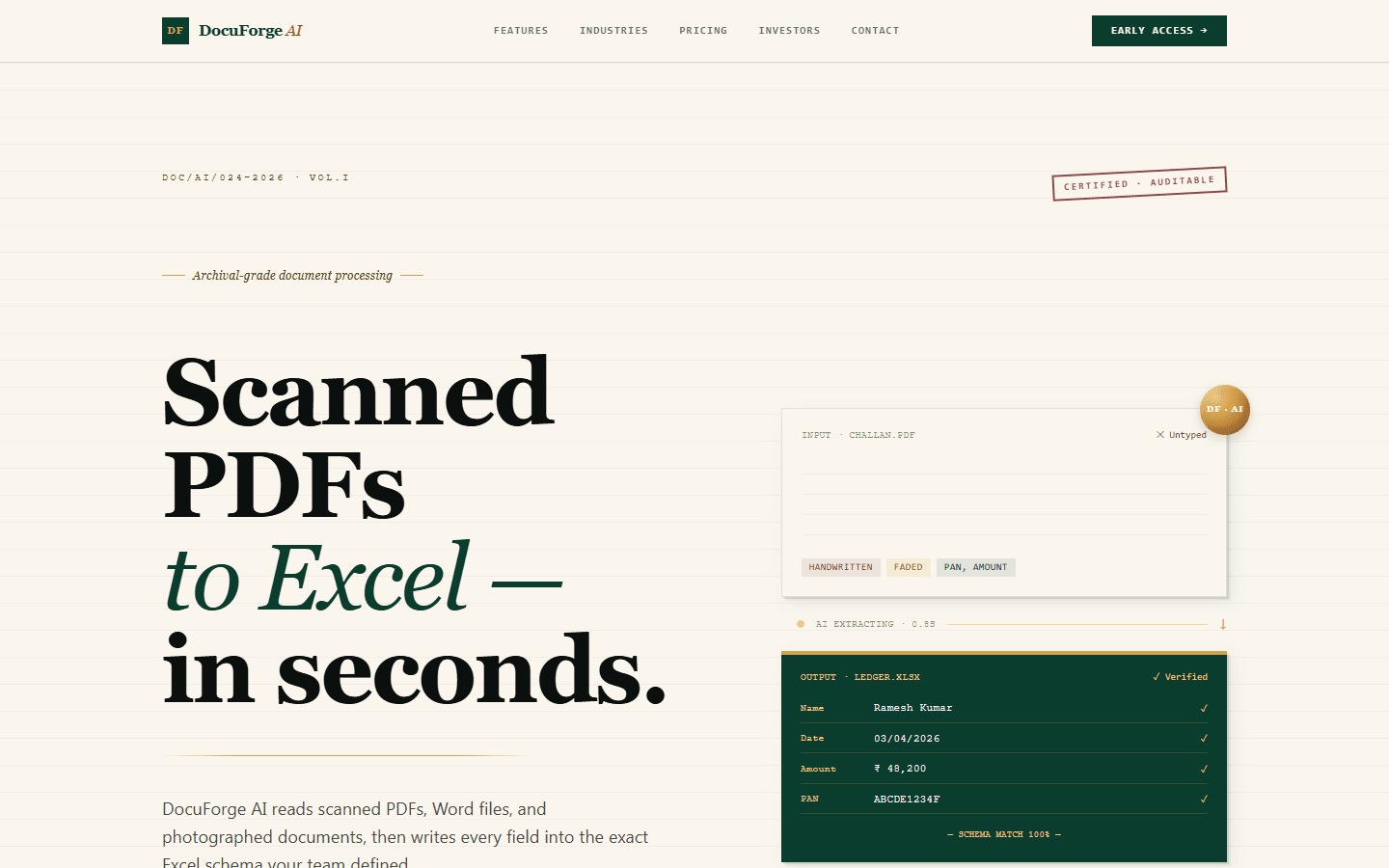
DocuForge AI
Turn scanned PDFs and Word docs into perfectly-formatted Excel — in seconds, not days.
- Drag-and-drop PDF, Word & image ingestion
- Custom Excel schema mapping per user
- Row-level confidence scoring
AI Product / AI / OCR
- Beta
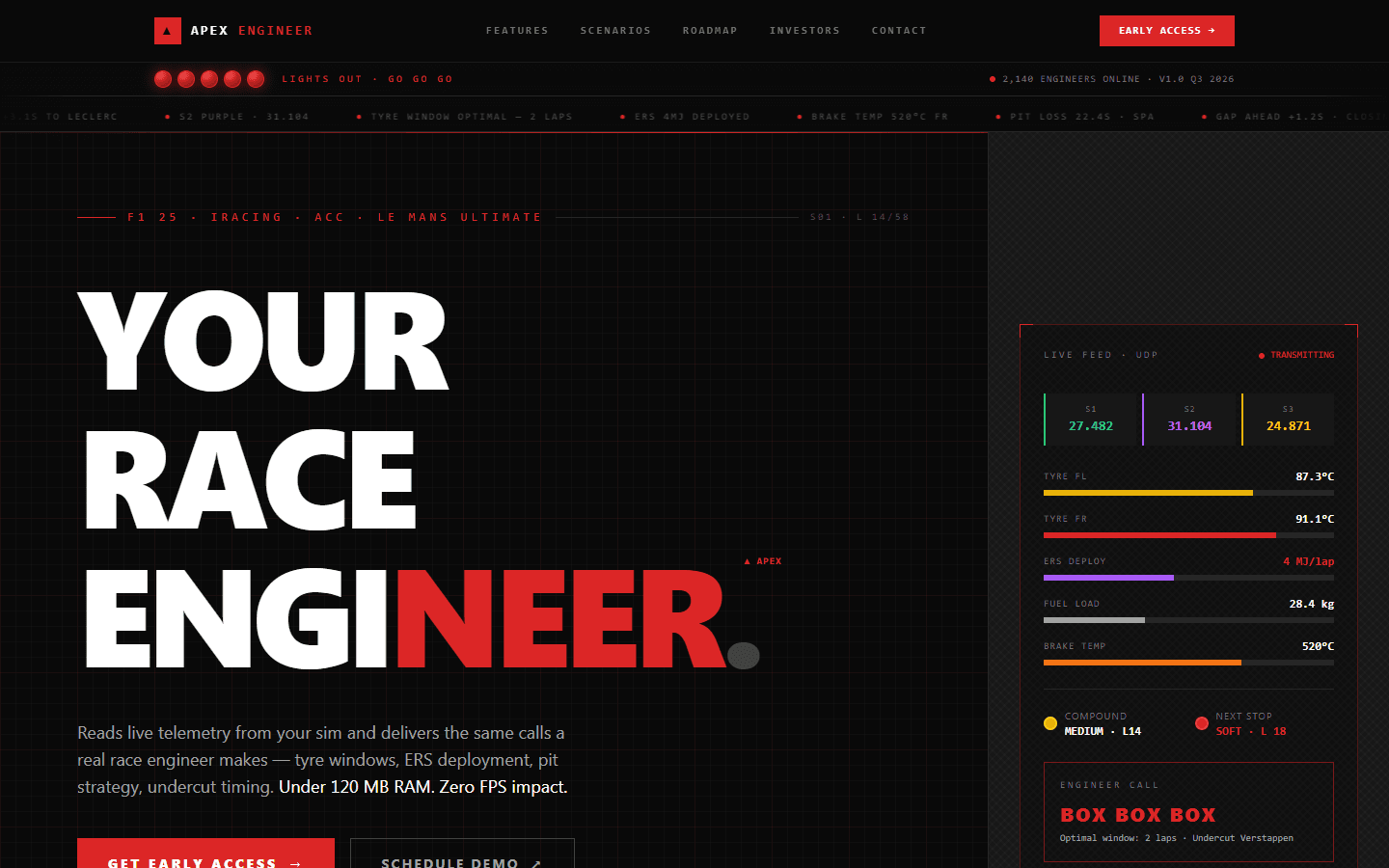
Apex Engineer
Your personal F1 race engineer — live strategy, setups, and split-second calls while you drive.
- Live race strategy calls (push, save, box)
- ERS / battery deployment guidance per corner
- Track-specific setup recommendations
AI Product / AI / Tauri
07 /
Related services
Integrate anthropic claude API
You want Claude in production with tool use, streaming, vision, and prompt caching — but the SDK is new for your team.
Fine-tune LLM on custom data
You need an LLM that talks like your brand, uses your domain language, and avoids the open-web tone of GPT defaults.
Migrate from OpenAI to claude
You want to switch (or add) Anthropic Claude for cost, quality, or vendor-risk reasons — but tool calls, system prompts, and streaming differ.
Reduce OpenAI / anthropic API costs
Your AI feature works but the monthly API bill is climbing and your CFO wants a plan to cut it.
Build LLM evaluation pipeline
You ship LLM features by vibes — there's no automated eval, so model swaps and prompt changes are pure gut feel.
Generative AI development
Text, image and code generation inside your product.
08 /
Frequently asked questions
When is fine-tuning an LLM worth it?
When a narrow task repeats at volume and needs a consistent format or voice, faster responses or a lower cost per call, and you can supply enough high-quality examples to train on. If the real problem is missing knowledge, retrieval usually works better, because facts change and a tuned model does not update itself. We test both on your evaluation set before recommending one.
Can you integrate an LLM into our existing application?
Yes, without rebuilding it. We add a service or module that your application calls like any other dependency, so the model sits behind an interface your team controls. Older systems that cannot call an external API directly can go through a small middleware service or a message queue. Your user interface and data model stay as they are unless you want them changed.
Can we switch between OpenAI, Claude and Gemini later?
Yes, and the integration layer exists for exactly that. Features call your own interface rather than a vendor SDK, prompts and test sets are stored with your code, and each provider sits behind its own adapter. Moving a task to another model then means editing configuration and rerunning the tests, not rewriting features.
How do you control what LLM calls cost us?
We track spending per feature and per customer from the first prototype. Costs then come down through prompt caching, trimmed context, routing simple requests to smaller models, batching work that is not urgent, and limits tied to your plans. Alerts fire when spending moves outside its normal range, so a surprise shows up on a dashboard rather than on the invoice.
Can a model run privately inside our own cloud?
Yes. Open-weight models such as Llama or Mistral can be served from your own cloud account or hardware, so prompts and outputs stay inside your own environment. The major providers also sell enterprise access with regional hosting and contractual limits on how your data is used. We compare the options on quality, data rules and running cost, then recommend one.
How do you stop model upgrades from breaking features?
Every feature has an evaluation set, and every model or prompt change runs against it in CI before release. We pin model versions in production, test new ones side by side on your real examples, and move traffic gradually behind a flag. If quality drops after a switch, rolling back is a single configuration change.
Ready to build AI that actually works in production?
Tell us about your AI project and get a free technical consultation within 24 hours. We'll map your use case, assess your data, and give you an honest feasibility assessment — no sales pitch.