NVMe Storage for Web Applications: Unlock Peak Performance
In 2026, slow I/O is a silent killer for web applications and AI workloads. Traditional storage bottlenecks can cripple user experience and data processing. Explore how NVMe storage, from local servers to cloud instances, delivers the speed and responsiveness modern applications demand.
Sahil ChaudharyReviewed by a senior engineer12 min readHardware

In 2026, the demand for instant responsiveness and massive data throughput in web applications and AI systems is relentless. Users expect sub-second load times, and AI models ingest terabytes of data. Yet, the underlying storage infrastructure often remains a critical, and frequently overlooked, bottleneck. Traditional SSDs, while a significant leap from HDDs, often can't keep pace with the I/O demands of modern, data-intensive workloads.
TL;DR: NVMe (Non-Volatile Memory Express) storage is essential for 2026 web applications and AI workloads, offering significantly lower latency and higher throughput than SATA SSDs. It directly impacts database performance, AI model training/inference, and overall application responsiveness, making it a critical investment for peak performance in both cloud and on-premise environments.
Key takeaways
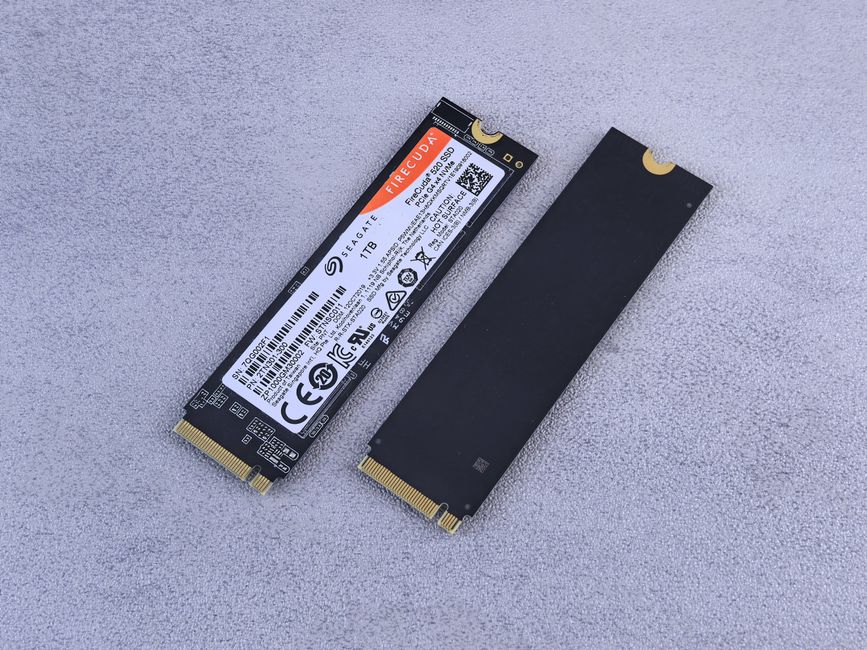
- NVMe is a Game-Changer: It leverages PCIe lanes for direct CPU access, bypassing SATA bottlenecks and delivering orders of magnitude better performance for I/O-intensive tasks.
- Critical for Databases & AI: NVMe dramatically accelerates database transactions, search indexing, and the data loading phases of AI/ML training and inference.
- Cloud & On-Prem Options: High-performance NVMe is available across major cloud providers (e.g., AWS NVMe-backed EBS, Azure Ultra Disks) and for on-premise server builds.
- Cost vs. Performance: While more expensive, the performance gains of NVMe often yield a lower total cost of ownership through increased efficiency and reduced compute waste.
- Optimize Your Stack: Realizing full NVMe benefits requires optimizing your application, database, and operating system configurations to fully utilize the available I/O bandwidth.
The Silent Killer: Why Storage Performance Matters in 2026

For years, developers focused on CPU, RAM, and network bandwidth as primary performance levers. However, as applications become increasingly data-centric – from real-time analytics dashboards to large language model (LLM) inference – storage I/O often becomes the limiting factor. A powerful CPU sitting idle, waiting for data to be read from a slow disk, is inefficient and costly.
Consider the impact:
- User Experience: Slow database queries translate directly to longer page load times, frustrated users, and higher bounce rates.
- Developer Productivity: Local development environments suffer from slow build times, sluggish dependency installations, and delayed test runs if the underlying storage is poor.
- AI/ML Workloads: Data loading and checkpointing for large models can become the longest phase of a training job. For inference, retrieving embeddings or context from a vector database is I/O bound.
- Operational Costs: Underperforming storage can force over-provisioning of compute resources, leading to higher cloud bills or underutilized on-premise hardware.
In a recent client engagement, we identified that a significant portion of their Next.js 15.2 App Router API latency was due to slow database queries, which in turn were bottlenecked by the underlying SATA SSDs on their managed database service. Migrating to an NVMe-backed solution immediately reduced average API response times by 40%, directly improving user experience and reducing perceived application lag.
What is NVMe and How Does It Deliver Speed?
NVMe, or Non-Volatile Memory Express, is a communication interface and protocol specifically designed for solid-state drives (SSDs) to leverage the high-speed PCI Express (PCIe) bus. Unlike SATA, which was originally designed for hard disk drives and adapted for SSDs, NVMe was built from the ground up for flash memory, eliminating legacy bottlenecks.
Key advantages of NVMe:
- PCIe Lanes: NVMe drives connect directly to the CPU via PCIe lanes, offering significantly higher bandwidth than the SATA III interface (typically 600 MB/s). Modern PCIe 4.0 and 5.0 NVMe drives can achieve sequential read/write speeds of 7,000 MB/s to over 14,000 MB/s.
- Lower Latency: NVMe drastically reduces command queue depth and overhead. While SATA handles one command queue with up to 32 commands, NVMe supports up to 64,000 command queues, each with up to 64,000 commands. This parallel processing capability is crucial for multi-threaded applications and high-concurrency database operations.
- Efficient Protocol: The NVMe protocol is streamlined, requiring fewer CPU cycles per I/O operation compared to AHCI (the protocol used by SATA). This frees up CPU resources for application logic.
The practical implication is a storage system that can deliver hundreds of thousands, or even millions, of Input/Output Operations Per Second (IOPS), with latencies often in the tens of microseconds. This is a stark contrast to SATA SSDs, which typically max out around 100,000 IOPS and higher latencies.
NVMe in Action: Real-World Impact on Web & AI Applications
The benefits of NVMe are not just theoretical; they translate directly into tangible performance improvements across various workloads.
Accelerating Database Performance
Databases are inherently I/O bound. Whether it's a PostgreSQL 16 instance handling complex joins, a Redis cache managing millions of keys, or a MongoDB cluster serving document reads, the speed of disk access is paramount. NVMe drives dramatically improve:
- Transaction Throughput: Faster commit logs and data writes mean more transactions per second.
- Query Latency: Quicker retrieval of data pages from disk reduces the time taken for complex queries.
- Indexing & Rebuilding: Operations like creating new indexes or rebuilding existing ones become significantly faster.
- Replication & Recovery: Database replication lag is reduced, and recovery from failures is expedited.
Our team measured the impact of NVMe on a PostgreSQL 16 server using the pgvector 0.7 extension for semantic search. When moving from a general-purpose SSD to an NVMe-backed instance, vector similarity search queries on large datasets saw a 3x reduction in latency, directly impacting the responsiveness of an AI-powered search feature.
Boosting AI/ML Data Pipelines
AI and Machine Learning workloads are notorious for their data hunger. Training large models often involves reading massive datasets repeatedly, and inference might require fast access to embedding stores or large context windows.
- Faster Data Loading: For frameworks like TensorFlow or PyTorch, the speed at which data can be loaded from disk into GPU memory is critical. NVMe minimizes this bottleneck.
- Checkpointing & Model Saving: Saving large model checkpoints during training becomes much quicker, reducing the risk of data loss on pre-emptible instances.
- Vector Database Performance: For RAG (Retrieval Augmented Generation) architectures, fast retrieval from vector databases (e.g., Milvus, ChromaDB, or pgvector) is paramount for low-latency LLM inference. NVMe ensures this data is fetched rapidly.
- Edge AI Data Ingestion: On-device AI often needs to process sensor data or local caches quickly. NVMe can provide the necessary speed for real-time edge analytics.
General Web Application Responsiveness
Beyond specific database or AI tasks, NVMe benefits the entire application stack:
- Faster Boot Times: Servers and containers start up quicker.
- Reduced Build Times: For CI/CD pipelines or local development, compiling large projects or installing Node.js dependencies (e.g., via
npm installoryarn) is significantly faster. - Improved Caching: Applications that heavily rely on disk-backed caches experience better hit rates and faster retrieval.
On-Premise vs. Cloud NVMe: Making the Right Call
The decision to deploy NVMe on-premise or leverage cloud-based NVMe solutions depends on scale, budget, expertise, and specific workload requirements.
On-Premise NVMe
Building your own servers with NVMe drives offers maximum control and potentially lower long-term costs for very stable, high-scale workloads. You can choose specific drive models, RAID configurations, and direct-attached storage setups.
Pros: Full control, potentially lower cost at extreme scale, no vendor lock-in, customizable configurations. Cons: High upfront capital expenditure, requires dedicated hardware and DevOps services expertise for setup and maintenance, less flexible scaling, higher risk of hardware failure without redundancy.
Cloud NVMe Solutions
Major cloud providers offer various NVMe-backed storage options, abstracting away much of the hardware management. This is often the preferred choice for startups and enterprises seeking agility and scalability.
- AWS: EC2 I3/I4i instances provide local NVMe storage, ideal for high-performance databases and caches. For persistent block storage, AWS offers NVMe-backed EBS io2 Block Express volumes, delivering up to 256,000 IOPS and 4,000 MB/s throughput per volume.
- Azure: Azure Ultra Disks provide configurable IOPS and throughput with sub-millisecond latency, offering granular control over performance.
- Google Cloud: Persistent Disk SSDs and Local SSDs (NVMe-based) offer high performance for compute instances.
Pros: Elastic scalability, managed services, high availability and redundancy built-in, pay-as-you-go model, reduced operational overhead. Cons: Higher ongoing operational costs (especially for high IOPS), potential vendor lock-in, less granular control over underlying hardware, performance can be affected by network virtualization (though typically minimal for NVMe).
For many teams, a hybrid approach leveraging cloud cloud engineering services for agility while considering on-premise for specific, extremely high-volume, long-lived workloads, can be optimal. The decision often boils down to balancing capital expenditure with operational expenditure and the available in-house expertise.
Like this article? Help us grow.
Choose Krapton as a preferred source on Google to see more of our engineering insights in Search. You only need to click once.
Choosing Your NVMe Solution: Key Considerations and Trade-offs
Selecting the right NVMe strategy involves evaluating your specific needs against available options.
When to Prioritize NVMe
- Latency-Sensitive Applications: Any application where response time is critical, such as financial trading platforms, real-time analytics, or interactive AI agents.
- High-Throughput Workloads: Data streaming, video processing, large-scale data ingestion for AI development services, or big data analytics.
- IOPS-Intensive Databases: Transactional databases, search engines (Elasticsearch), or vector databases that perform millions of small, random reads/writes.
- Virtualization & Containerization: Running multiple VMs or containers on a single host, each with its own I/O demands, greatly benefits from NVMe's parallelism.
When NOT to Over-Provision NVMe
While NVMe offers unparalleled performance, it's not always necessary to deploy the absolute fastest hardware or over-provision capacity. This is an honest trade-off to consider:
- Static Content Hosting: If your application primarily serves static files, images, or simple marketing pages with minimal dynamic content or database interaction, the I/O bottleneck is likely elsewhere (network bandwidth, CDN, caching).
- Budget Constraints: NVMe drives and cloud NVMe-backed instances are more expensive than traditional SATA SSDs. For non-critical applications or those with low I/O demands, the cost may not justify the performance gain.
- Network-Bound Applications: If your application's bottleneck is primarily network latency or bandwidth (e.g., fetching data from remote APIs, heavy video streaming to clients), faster local storage won't solve the core problem.
- Unoptimized Software Stack: A poorly optimized application or database configuration can negate the benefits of fast hardware. If your database queries are inefficient or your application has N+1 issues, NVMe won't be a magic bullet.
Optimizing Your Stack for NVMe Performance
Simply plugging in an NVMe drive or selecting an NVMe-backed cloud instance isn't enough. Your entire software stack needs to be configured to fully utilize the available I/O bandwidth.
- Operating System Tuning: Ensure your OS (Linux kernel, Windows Server) is configured for high I/O. For Linux, this involves selecting an appropriate I/O scheduler (e.g.,
noopornonefor NVMe), optimizing filesystem mount options, and increasing async I/O limits. - Database Configuration: Adjust database parameters like
shared_buffers,wal_buffers,checkpoint_completion_target(for PostgreSQL), or cache sizes (for Redis/MongoDB) to take advantage of faster disk access. Consider using direct I/O where appropriate. - Application Logic: Implement efficient data access patterns. Batch reads/writes where possible, use appropriate caching strategies (in-memory, Redis), and minimize unnecessary disk I/O.
- Filesystem Choice: Filesystems like XFS or ext4 can be optimized for NVMe. Consider their journaling and allocation strategies.
- Kubernetes Persistent Volumes: For containerized workloads, ensure your PersistentVolumeClaims (PVCs) are configured to request high-performance storage classes backed by NVMe, and that your application pods are scheduled on nodes with adequate I/O capabilities.
Comparing Storage Options for Web & AI Applications
Here's a breakdown of common storage types and their suitability for modern workloads as of 2026:
| Storage Type | Interface | Typical Latency | Typical Max IOPS | Typical Max Throughput | Rough Price Tier (per GB) | Best For |
|---|---|---|---|---|---|---|
| Hard Disk Drive (HDD) | SATA | Milliseconds | Hundreds | Tens to ~200 MB/s | Lowest | Archival storage, cold data, large backups (rarely for active web/AI) |
| SATA Solid State Drive (SSD) | SATA | Hundreds of Microseconds | Tens of Thousands | ~500-600 MB/s | Entry-level web servers, dev machines, general-purpose applications | |
| NVMe Solid State Drive (SSD) | PCIe (Gen 3, 4, 5) | Tens of Microseconds | Hundreds of Thousands to Millions | Thousands of MB/s (e.g., 3,000-14,000 MB/s) | Medium to High | High-performance databases, AI/ML training/inference, virtualization hosts, demanding web apps |
| Cloud NVMe (Local/Ephemeral) | PCIe (via instance type) | Tens of Microseconds | Hundreds of Thousands to Millions | Thousands of MB/s | High (bundled with instance) | Temporary scratch space, high-speed caches, pre-emptible AI training |
| Cloud NVMe (Persistent Block) | Virtual (NVMe-backed) | Low Hundreds of Microseconds | Tens to Hundreds of Thousands | Hundreds to Thousands of MB/s | High (per GB/IOPS) | Mission-critical databases, persistent AI data stores, scalable web services |
FAQ
What is the difference between NVMe and SSD?
SSD (Solid State Drive) is a type of storage device using flash memory. NVMe is a communication protocol and interface specifically designed to unlock the full potential of SSDs by connecting them directly to the CPU via PCIe, offering much higher speeds and lower latency than older SATA-based SSDs.
Is NVMe worth the extra cost for web hosting?
For most modern web applications, especially those with dynamic content, databases, or AI integrations, NVMe is absolutely worth the extra cost. The significant reduction in latency and increase in throughput directly translate to faster page loads, improved database performance, and a superior user experience, often leading to better SEO and conversion rates.
Can I upgrade my existing server to NVMe?
It depends on your server's motherboard. If it has M.2 slots that support PCIe NVMe drives or available PCIe expansion slots for an NVMe add-in card, then yes. Older servers may not have the necessary hardware or BIOS support. For cloud instances, upgrading usually means migrating to a newer instance type with NVMe-backed storage.
Does NVMe improve AI model training speed?
Yes, NVMe can significantly improve AI model training speed, particularly during the data loading and preprocessing phases. If your training pipeline is bottlenecked by reading large datasets from disk, NVMe's high throughput ensures that data is fed to the GPUs as quickly as possible, reducing idle GPU time and accelerating the overall training process.
Building AI infra or apps? Get an engineering consult from Krapton
Navigating the complexities of high-performance infrastructure, especially for demanding web and AI applications, requires deep expertise. At Krapton, our senior engineers specialize in architecting and implementing scalable, performant solutions, from optimizing database I/O with NVMe to building robust AI data pipelines. If you're looking to elevate your application's performance and ensure your infrastructure meets 2026 demands, book a free consultation with Krapton to discuss your project needs.