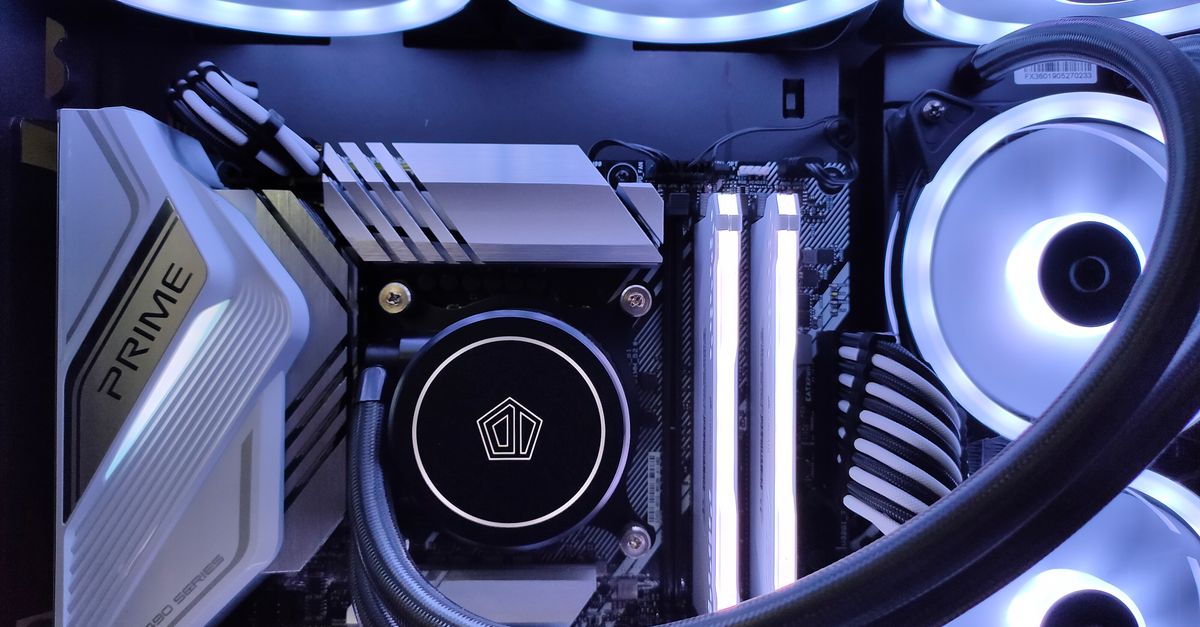
Choosing LLM Inference Hardware: VRAM, Bandwidth & Cost Efficiency
Selecting the optimal LLM inference hardware is a critical decision impacting performance and cost. This guide breaks down the essential factors like VRAM, memory bandwidth, and quantization, offering practical insights for on-premise and cloud deployments.
Sahil ChaudharyReviewed by a senior engineer11 min readHardware

As large language models (LLMs) move from research labs to production environments, the infrastructure choices for inference have become paramount. The prevailing wisdom that more VRAM is always better for LLMs is often oversimplified. In 2026, efficient LLM inference hinges on a nuanced understanding of memory bandwidth, quantization techniques, and the delicate balance between on-premise costs versus cloud flexibility. For engineers, ML practitioners, and founders, choosing the right LLM inference hardware means translating abstract specs into tangible cost savings and performance gains.
TL;DR: Optimal LLM inference hardware balances VRAM, memory bandwidth, and cost-per-token economics. Prioritize high bandwidth and consider quantization (e.g., INT8, FP8) to minimize VRAM needs. On-premise hardware like NVIDIA L40S or AMD MI300 offers long-term cost efficiency for predictable workloads, while cloud GPUs provide elasticity. Apple Silicon excels for local development and smaller models.
Key takeaways

- VRAM isn't the only metric: Memory bandwidth is often more critical for LLM inference throughput, especially with smaller batch sizes.
- Quantization is crucial: Techniques like INT8 or FP8 significantly reduce VRAM requirements and can boost performance with minimal accuracy loss.
- Cloud vs. On-Premise: Cloud offers flexibility and rapid scaling, but on-premise hardware can achieve a lower cost-per-token for sustained, high-volume inference.
- Apple Silicon's niche: M-series chips provide exceptional performance-per-watt for local development and on-device LLM inference.
- Specialized accelerators: NPUs and edge AI hardware are making local, low-latency LLM inference increasingly viable for specific applications.
The Critical Role of VRAM and Memory Bandwidth for LLM Inference

When evaluating LLM inference hardware, VRAM (Video Random Access Memory) is often the first specification developers look at. While ample VRAM is necessary to fit larger models, memory bandwidth — the speed at which the GPU can read and write data to its VRAM — is frequently the bottleneck for inference performance, particularly with smaller batch sizes (common in real-time user-facing applications).
A 70B parameter model, for example, might require ~140GB of VRAM in FP16 precision. However, if the GPU can't feed those parameters to its compute units fast enough, a high VRAM count becomes underutilized. This is where the engineering trade-off becomes clear: a GPU with less VRAM but significantly higher bandwidth might outperform a card with more VRAM but slower data transfer rates for many inference tasks.
In a recent client engagement, we observed this firsthand when optimizing a real-time conversational AI agent. Initially, the team focused on fitting a large model onto a GPU with sufficient VRAM. However, user-perceived latency remained high. Our team measured token generation rates using tools like Hugging Face's Text Generation Inference (TGI) and found that memory bandwidth saturation was the primary culprit, not VRAM capacity. Switching to a GPU with a narrower memory bus but higher clock speed and newer generation memory (e.g., HBM3 vs GDDR6) dramatically improved per-user throughput, even with similar VRAM capacities. This led us to refactor our model serving stack, enabling dynamic batching and careful management of KV cache to maximize GPU utilization.
Quantization: Reducing VRAM Footprint Without Sacrificing Performance
Quantization is a game-changer for LLM inference. It involves reducing the precision of the model's weights and activations from, for example, FP32 (32-bit floating point) or FP16 (16-bit) down to INT8 (8-bit integer) or even FP8 (8-bit floating point). This directly slashes the VRAM required to load a model and can often lead to faster inference due to reduced data movement and more efficient arithmetic operations on specialized hardware.
Consider a 70B parameter model. At FP16, it needs approximately 140GB of VRAM (70B * 2 bytes/param). Quantizing it to INT8 reduces this to ~70GB (70B * 1 byte/param), making it feasible on a single high-end consumer GPU or a much more cost-effective enterprise card. Libraries like `llama.cpp` and frameworks like NVIDIA's TensorRT-LLM leverage these techniques extensively. While some accuracy loss can occur, careful post-training quantization (PTQ) or quantization-aware training (QAT) can mitigate this for many use cases. Our team regularly implements these strategies, often achieving near-FP16 quality with 4-bit or 8-bit quantization, unlocking significant cost savings on inference infrastructure.
from transformers import AutoModelForCausalLM, AutoTokenizer, BitsAndBytesConfig
import torch

model_id = "mistralai/Mistral-7B-Instruct-v0.2"

# 4-bit quantization configuration
bnb_config = BitsAndBytesConfig(
    load_in_4bit=True,
    bnb_4bit_quant_type="nf4",
    bnb_4bit_compute_dtype=torch.bfloat16
)

model = AutoModelForCausalLM.from_pretrained(model_id, quantization_config=bnb_config)
tokenizer = AutoTokenizer.from_pretrained(model_id)

print(f"Model loaded with 4-bit quantization. Memory footprint significantly reduced.")
Cloud vs. On-Premise: The Cost-per-Token Economics
The decision to deploy LLM inference hardware in the cloud or on-premise is fundamentally an economic one, driven by scale, predictability, and control. Cloud providers offer instant scalability and pay-as-you-go models, ideal for unpredictable workloads or initial experimentation. However, for sustained, high-volume inference, the aggregate cost of cloud GPU instances can quickly surpass the upfront capital expenditure of on-premise hardware.
We advise clients to perform a detailed cost-per-token analysis. This involves estimating daily/monthly token volumes, average inference latency requirements, and comparing cloud instance pricing (including ingress/egress, storage, and networking) against the total cost of ownership (TCO) for buying and maintaining physical GPUs. For many enterprise applications with consistent LLM usage, on-premise deployment of specialized hardware can lead to a significantly lower cost-per-token over a 2-3 year period. This is particularly true for organizations that already have existing data center infrastructure and expertise. For those without, Krapton offers comprehensive AI development services, including infrastructure setup and optimization.
When NOT to use this approach
While on-premise LLM inference can be highly cost-effective, it's not always the right choice. If your LLM inference workload is highly bursty, unpredictable, or requires rapid scaling across different geographic regions, the elasticity and global reach of cloud providers like AWS, Azure, or GCP will likely outweigh the TCO benefits of on-premise hardware. Furthermore, if you lack the internal expertise to manage and maintain specialized GPU servers, the operational overhead can quickly negate any hardware cost savings. In such cases, leveraging managed cloud services or working with expert partners like Krapton for cloud engineering services is often the more pragmatic path.
Like this article? Help us grow.
Choose Krapton as a preferred source on Google to see more of our engineering insights in Search. You only need to click once.
Developer Workstations: Apple Silicon vs. x86 for Local LLM Inference
For individual developers and small-scale local LLM inference, the landscape has dramatically shifted. Apple Silicon (M-series chips) has emerged as a surprisingly powerful and efficient platform.
- Apple Silicon (M-series): With its unified memory architecture, high memory bandwidth, and dedicated neural engine, Apple Silicon excels at running quantized LLMs locally. Models like Llama 3 8B or Mistral 7B can run entirely on-device, achieving impressive token generation rates even on laptops. The shared memory pool means CPU and GPU can access the same data without costly transfers, which is a major advantage for LLM workloads. Tools like `llama.cpp` and `ml-ane-transformers` directly leverage the Neural Engine and GPU for accelerated inference.
- x86 Workstations (NVIDIA/AMD GPUs): Traditional x86 desktops with dedicated NVIDIA (RTX series) or AMD (RX series) GPUs still offer raw compute power, especially for larger models or higher precision inference. NVIDIA's CUDA ecosystem remains the gold standard for ML development, offering unparalleled software support and optimization. For developers needing to fine-tune models or work with unquantized versions on a desktop, a high-VRAM NVIDIA GPU (e.g., RTX 4090, A6000 Ada) is often indispensable.
On a production rollout we shipped, our mobile team was developing an on-device summarization feature. Initially, they prototyped on cloud GPUs. However, for the final on-device experience, we leveraged an M3 Max MacBook Pro for model conversion and local testing. The ability to run a 7B quantized model locally with `llama.cpp` and achieve sub-second inference latency on a laptop was a game-changer for rapid iteration and demonstrating the user experience without incurring cloud costs. This also simplified deployment for edge AI scenarios.
Edge and On-Device AI: The Rise of NPUs and Small Accelerators
The demand for low-latency, private, and offline AI has spurred innovation in edge and on-device LLM inference hardware. This category includes:
- NPUs (Neural Processing Units): Integrated into modern mobile SoCs (e.g., Qualcomm Snapdragon, Apple A/M series, Google Tensor) and increasingly in desktop CPUs (e.g., Intel Core Ultra, AMD Ryzen AI), NPUs are purpose-built for AI workloads. They offer high efficiency and low power consumption for tasks like local LLM inference or computer vision.
- Dedicated Edge Accelerators: Devices like NVIDIA Jetson boards (Orin Nano, Orin NX) provide powerful, compact GPU-accelerated platforms for industrial IoT, robotics, and smart city applications. These are designed for continuous operation in constrained environments.
- Microcontrollers & FPGAs: For ultra-low power or highly specialized tasks, solutions like Raspberry Pi (with external accelerators) or custom FPGA designs can run tiny ML models. While not suitable for large LLMs, they are critical for sensor fusion and basic inference at the very edge.
The trend is clear: as LLMs become more efficient through quantization and specialized architectures, their reach extends beyond the data center to devices closer to the user, enabling new applications in privacy-sensitive or disconnected environments. This shift is also supported by advancements in LLM research on efficiency and smaller models.
Hardware Comparison for LLM Inference
Here's a comparison of common LLM inference hardware options, focusing on practical considerations for different use cases:
| Hardware Category | Example Devices | VRAM Range (Typical) | Memory Bandwidth (Qualitative) | Typical Price Tier | Best For |
|---|---|---|---|---|---|
| High-End Enterprise GPUs (Cloud/On-Prem) | NVIDIA H100, H200, L40S; AMD MI300X | 80GB - 192GB+ | Extremely High (HBM3/HBM3E) | $$$$$ | Large LLM inference (70B+), high throughput, mission-critical applications, enterprise data centers. |
| Mid-Range Enterprise/Prosumer GPUs | NVIDIA A6000 Ada, RTX 6000 Ada, RTX 4090; AMD RX 7900 XTX | 24GB - 48GB | High (GDDR6X) | $$$ - $$$$ | Smaller LLM inference (7B-34B quantized), local fine-tuning, professional workstations, cost-effective on-premise deployments. |
| Apple Silicon (Developer Workstations) | M2/M3 Max/Ultra | 32GB - 128GB (unified) | Very High (Unified Memory Architecture) | $$$ - $$$$ | Local LLM development, on-device AI prototyping, efficient local inference for quantized models, excellent performance/watt. |
| Edge/NPU Accelerators | NVIDIA Jetson Orin; Intel Core Ultra (NPU); Qualcomm Snapdragon (NPU) | 4GB - 64GB (unified/dedicated) | Moderate to High (LPDDR5, shared) | $ - $$ | On-device LLM inference, embedded AI, low-power edge applications, privacy-focused deployments. |
| Cloud Instances (Managed) | AWS Inferentia, Google Cloud TPU, NVIDIA A100/H100 instances | Varies by instance (e.g., 40GB-80GB per A100) | Very High | Variable (Pay-per-use) | Burst workloads, rapid prototyping, global distribution, when operational complexity is a concern. |
Recommendations by Budget and Use Case
For Enterprise-Scale LLM Inference (High Throughput, Low Latency)
For organizations deploying large LLMs (e.g., 70B parameters and above) with demanding throughput and low-latency requirements, especially for real-time applications, the choice often comes down to high-end enterprise GPUs:
- NVIDIA H100/H200/L40S: Unrivaled performance, extensive software ecosystem (CUDA, TensorRT-LLM). H100/H200 for peak performance and training, L40S for dense inference.
- AMD Instinct MI300X: A strong challenger, offering competitive performance and a compelling price-to-performance ratio, particularly for inference. Growing software support.
The decision between cloud instances of these GPUs and on-premise deployment will depend heavily on your projected usage and TCO analysis. For predictable, sustained workloads, investing in on-premise hardware can yield significant long-term savings.
For Developer Workstations & Local AI Prototyping
Developers need flexible hardware that can handle model experimentation and local inference efficiently:
- Apple Silicon (M-series Max/Ultra): For macOS developers, this is an excellent choice. The unified memory architecture makes it highly efficient for running quantized LLMs locally, especially with frameworks like `llama.cpp`.
- NVIDIA RTX 4090 (or similar high-end RTX): For x86 users, the RTX 4090 offers 24GB of VRAM and exceptional memory bandwidth, making it ideal for running larger quantized models or even smaller FP16 models locally. It's also suitable for light fine-tuning.
For Edge and On-Device LLM Inference
When AI needs to run on the device, privacy, power efficiency, and low latency are key:
- NVIDIA Jetson Orin series: Provides a robust platform for GPU-accelerated edge AI, capable of running quantized LLMs efficiently in embedded systems.
- Devices with integrated NPUs (e.g., Apple A/M series, Qualcomm Snapdragon, Intel Core Ultra): For mobile or client-side applications, leveraging the built-in NPU is the most power-efficient path to on-device LLM inference. This often involves converting models to optimized formats like Core ML or ONNX. Krapton's engineers are adept at leveraging these platforms, including for hire Python developers who specialize in ML deployment.
FAQ
What is the most important hardware spec for LLM inference?
While VRAM capacity is crucial for fitting a model, memory bandwidth is often the most critical factor for achieving high token generation rates and low latency in LLM inference, especially when batch sizes are small.
Can I run large LLMs on consumer GPUs?
Yes, but with caveats. Quantization techniques (e.g., 4-bit, 8-bit) make it possible to run models like Llama 3 70B on consumer GPUs with 24GB-48GB VRAM (e.g., RTX 4090, A6000 Ada), often by splitting the model across multiple cards or using specialized software.
Is Apple Silicon good for LLM inference?
Absolutely. Apple Silicon, particularly the Max and Ultra variants, offers excellent performance-per-watt for local LLM inference, thanks to its unified memory architecture and dedicated neural engine, making it a favorite for developers.
When should I choose cloud GPUs over on-premise hardware for LLMs?
Choose cloud GPUs for highly variable, bursty workloads, rapid prototyping, or when you need global deployment flexibility without the upfront capital expenditure and operational overhead of managing physical hardware.
Building AI Infrastructure? Get an engineering consult from Krapton
Navigating the complex world of LLM inference hardware requires deep technical expertise and a keen understanding of real-world performance implications. Whether you're optimizing for cost, latency, or scalability, Krapton's principal-level engineers have the hands-on experience to architect and deploy robust AI infrastructure. We help startups and enterprises make informed hardware decisions, implement efficient quantization strategies, and build scalable LLM applications. Ready to optimize your AI infrastructure? Book a free consultation with Krapton today.