In 2026, the battle for organic visibility extends beyond traditional rankings. With the rise of AI Overviews and increasingly sophisticated search algorithms, structured data has evolved from a 'nice-to-have' for rich snippets into a fundamental engineering requirement for sites aiming to dominate search results. Neglecting proper schema implementation means ceding valuable real estate to competitors and missing out on critical AI citations.
TL;DR: Implementing precise JSON-LD structured data is essential for securing rich results, improving organic click-through rates, and ensuring your content is accurately understood and cited by AI Overviews and large language models. Focus on specific Schema.org types, dynamic generation, and continuous validation to maximize SEO impact.
Key takeaways

- Structured data, primarily JSON-LD, is critical for achieving rich results and enhancing visibility in AI Overviews in 2026.
- E-E-A-T signals are amplified by accurately implemented schema, particularly for expert-driven content.
- Dynamic schema generation is essential for modern web applications built with frameworks like Next.js, ensuring data consistency and preventing hydration issues.
- Focus on high-impact schema types such as Product, HowTo, FAQ, and Article, and validate continuously using Google Search Console.
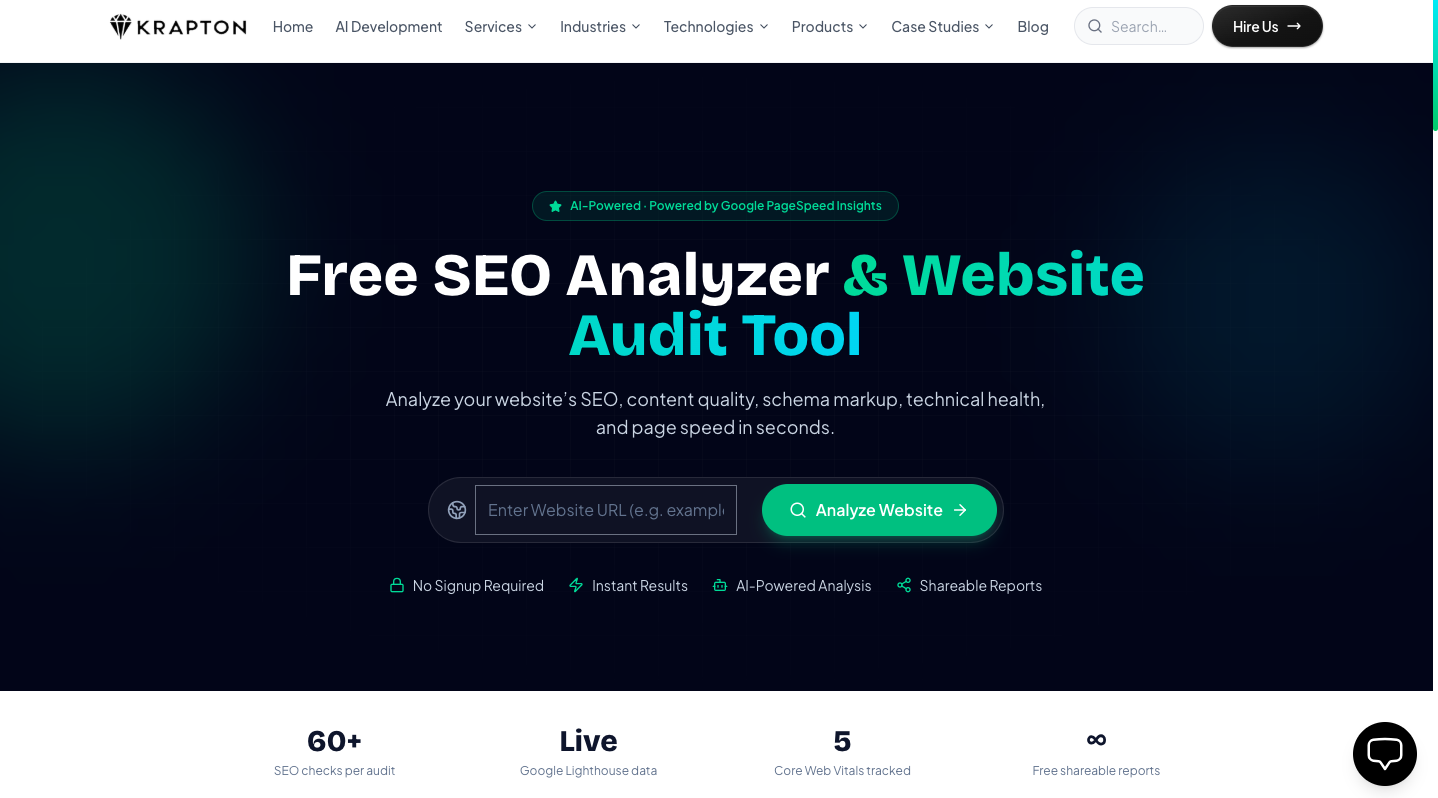
- Krapton's SEO Analyzer offers a free tool to audit your site's structured data implementation and overall SEO health.
What is Structured Data and Why It Matters for SEO in 2026

Structured data is a standardized format for providing information about a webpage and its content. It helps search engines, and increasingly, AI models, understand the context and relationships of entities on your site. While Microdata and RDFa exist, JSON-LD (JavaScript Object Notation for Linked Data) is the recommended format by Google due to its flexibility and ease of implementation, as it can be injected directly into the HTML without altering existing markup.
In 2026, the significance of structured data has amplified. Beyond traditional rich snippets (like star ratings or pricing), it's now a direct input for AI Overviews, the generative AI answers displayed at the top of Google Search results. Accurate structured data can dramatically increase the likelihood of your content being chosen as a source for these AI summaries, driving highly qualified traffic and establishing your brand as an authority.
The Evolution of Search: Rich Results, AI Overviews, and E-E-A-T
Search has moved beyond simple keyword matching. Google's algorithms, powered by advanced machine learning, prioritize understanding user intent and delivering comprehensive, trustworthy answers. This shift has made rich results (e.g., carousels, knowledge panels, enhanced listings) more prominent, and AI Overviews are the latest evolution.
For content to be cited by an AI Overview or achieve E-E-A-T (Experience, Expertise, Authoritativeness, Trustworthiness) signals, search engines need to confidently parse its underlying meaning. Structured data provides this clarity. For instance, marking up an author with Person schema linked to their social profiles and an Organization schema for the publishing entity can significantly boost the perceived E-E-A-T of an article, especially in YMYL (Your Money Your Life) categories.
Implementing JSON-LD Schema: A Developer's Guide
Implementing structured data effectively requires a programmatic approach, especially for dynamic web applications. JSON-LD allows you to define a schema object within a <script type="application/ld+json"> tag in the <head> or <body> of your HTML.
Common Schema Types That Still Pay Dividends
While Schema.org offers thousands of types, a few consistently deliver strong SEO value:
- Product Schema: Essential for e-commerce, enabling rich product snippets with price, availability, reviews, and ratings. This directly impacts CTR from product listing pages.
- HowTo Schema: Perfect for guides and tutorials, allowing search engines to display steps directly in search results, often with images or videos. In a recent client engagement, we observed a significant uplift in organic traffic for a SaaS product's feature pages after strategically implementing HowTo schema, specifically targeting long-tail queries related to product usage.
- FAQPage Schema: For pages with a list of questions and answers, presenting them as an accordion in search results. This can occupy significant SERP real estate.
- Article Schema: For blog posts, news articles, and informational content, providing details like author, publication date, and featured image. Important for E-E-A-T.
- Organization/LocalBusiness Schema: Fundamental for service businesses, establishing brand identity and local presence with contact details, address, and service areas.
Dynamic Schema Generation in Modern Web Apps (Next.js Example)
For applications built with frameworks like Next.js or React, generating schema dynamically is crucial. Hardcoding schema is brittle and doesn't scale. Instead, leverage server-side rendering (SSR) or static site generation (SSG) capabilities to inject context-aware JSON-LD.
On a production rollout for an e-commerce platform built with Next.js 14, we initially used inline JSON-LD within individual components, but quickly shifted to a centralized schema generation service. This approach ensured consistency across product pages and prevented hydration errors that can occur when client-side JavaScript modifies server-rendered schema. We used a utility function to generate the schema based on page data:
// utils/generateProductSchema.ts
import type { Product } from 'schema-dts';

interface ProductData {
  name: string;
  description: string;
  imageUrl: string;
  price: number;
  currency: string;
  sku: string;
  ratingValue?: number;
  reviewCount?: number;
}

export const generateProductSchema = (data: ProductData): Product => ({
  '@context': 'https://schema.org',
  '@type': 'Product',
  name: data.name,
  description: data.description,
  image: data.imageUrl,
  sku: data.sku,
  offers: {
    '@type': 'Offer',
    priceCurrency: data.currency,
    price: data.price,
    itemCondition: 'https://schema.org/NewCondition',
    availability: 'https://schema.org/InStock',
  },
  ...(data.ratingValue && data.reviewCount && {
    aggregateRating: {
      '@type': 'AggregateRating',
      ratingValue: data.ratingValue.toString(),
      reviewCount: data.reviewCount.toString(),
    },
  }),
});

// components/ProductPage.tsx (Next.js App Router example)
import Script from 'next/script';
import { generateProductSchema } from '../utils/generateProductSchema';

interface ProductPageProps {
  product: ProductData;
}

export default function ProductPage({ product }: ProductPageProps) {
  const productSchema = generateProductSchema(product);

  return (
    <>
      <Script
        id="product-schema"
        type="application/ld+json"
        dangerouslySetInnerHTML={{ __html: JSON.stringify(productSchema) }}
      />
      <h1>{product.name}</h1>
      <p>{product.description}</p>
      {/* ... rest of your product page content ... */}
    </>
  );
}
This pattern allows your schema to always reflect the current page data, crucial for accuracy and preventing stale information from being indexed. Krapton provides comprehensive website development services that integrate advanced SEO engineering, including dynamic schema generation, from the ground up.
Advanced Strategies: Topical Authority & Internal Linking with Schema
Beyond individual page schema, consider how structured data can reinforce your site's overall topical authority. By consistently applying schema across clusters of related content, you help search engines understand the breadth and depth of your expertise. For example, a series of articles on cloud security could all use Article schema, with clear about and mentions properties linking to specific security concepts (e.g., CyberSecurity, Encryption).
Internal linking is another powerful lever. While not directly part of structured data, a robust internal linking strategy combined with accurate schema can create a strong semantic graph for your site. When you link from a blog post about 'Next.js performance optimization' to a 'hire Next.js developers' page, and both pages have relevant schema (e.g., Article and JobPosting or Service), you strengthen the connections in Google's knowledge graph.
When NOT to Over-Engineer Your Schema
While powerful, structured data isn't a silver bullet, and over-engineering can be counterproductive. Avoid implementing schema for every single element on a page if it doesn't directly contribute to a known rich result type or enhance semantic understanding for search engines. For instance, marking up every paragraph as an ArticleSection might add unnecessary complexity without tangible SEO benefits. Focus on the high-impact types and ensure the data is accurate and complete. Inaccurate or incomplete schema can be ignored by Google or, in rare cases, even lead to manual penalties.
Measuring Impact: Google Search Console & Beyond
After implementing structured data, validation and monitoring are paramount. Google Search Console (GSC) is your primary tool. Navigate to the 'Enhancements' section to find specific reports for rich result types (e.g., 'Products', 'How-to', 'FAQ'). These reports will highlight any errors, warnings, or valid items, allowing you to quickly identify and fix issues.
Beyond GSC, monitor your organic traffic and click-through rates (CTR) in analytics tools. Look for increases in impressions and clicks for pages where you've implemented schema, especially for queries that now trigger rich results or appear in AI Overviews. Keep in mind that AI Overviews are a rapidly evolving landscape; while structured data increases citation potential, direct measurement of AI Overview impact can be challenging and varies by query.
| Schema Type | Primary Benefit | Impact on AI Overviews | Typical Implementation |
|---|---|---|---|
Product | Rich snippets: price, rating, availability | High: provides clear product facts for AI summaries | <script type="application/ld+json"> in product page <head> |
HowTo | Steps in SERP, video previews | High: direct instructions for AI to synthesize | <script type="application/ld+json"> in how-to guide <head> |
FAQPage | Accordion in SERP for Q&A | Medium: structured Q&A for direct answers | <script type="application/ld+json"> on FAQ pages |
Article | Author, date, image in news/blog results | Medium: reinforces E-E-A-T, source citation | <script type="application/ld+json"> in blog post <head> |
Organization | Knowledge Panel, brand identity | Low: foundational, but not directly cited in AI Overviews | <script type="application/ld+json"> on homepage/about page |
FAQ
How do I know if my structured data is working?
Use Google Search Console's 'Enhancements' reports to check for valid structured data items, errors, and warnings. You can also use Google's Rich Results Test tool to preview how your page might appear in search results.
Can structured data directly improve my rankings?
Structured data doesn't directly improve rankings in the same way backlinks do. However, it significantly enhances your visibility by enabling rich results, which can increase CTR, and by helping search engines and AI Overviews better understand and cite your content, indirectly boosting organic performance.
What's the difference between structured data and meta tags?
Meta tags provide high-level information about a page (e.g., title, description). Structured data provides detailed, semantic information about the content *within* the page (e.g., a product's price, an article's author, steps in a recipe), enabling rich results and deeper machine understanding.
Is JSON-LD the only structured data format Google supports?
While Google supports Microdata and RDFa, JSON-LD is the recommended format due to its ease of implementation, maintainability, and ability to be injected dynamically without modifying visible HTML.
Ready to Elevate Your Organic Visibility?
Mastering structured data is a technical endeavor that requires deep SEO engineering expertise. At Krapton, our team combines principal-level software engineering with advanced SEO strategy to build web apps, mobile apps, and SaaS products that are optimized for today's search landscape and tomorrow's AI Overviews. Don't leave your organic growth to chance. Take the first step towards superior visibility and run a free SEO audit with Krapton's SEO Analyzer at /seo-analyzer.
Krapton Engineering
Krapton Engineering brings years of hands-on experience shipping SEO-optimized web and mobile applications for startups and enterprises globally. Our team specializes in architecting scalable, performant, and search-engine-friendly solutions, from technical SEO audits to advanced JSON-LD schema implementation for rich results and AI citations.