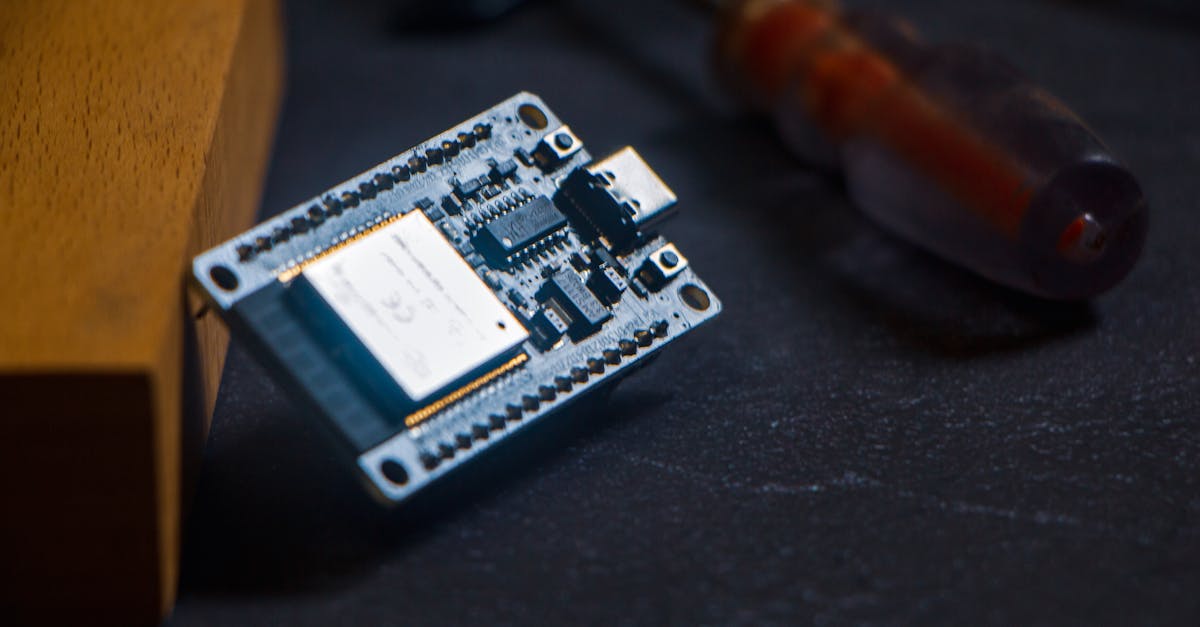
The proliferation of AI is rapidly shifting from purely cloud-centric models to intelligent devices at the 'edge' of networks. This move is driven by critical needs for lower latency, enhanced privacy, and reduced operational costs. As of 2026, companies are increasingly prioritizing on-device AI capabilities, making hardware selection a pivotal decision for successful deployment.
TL;DR: Selecting edge AI hardware involves balancing compute power (TOPS), memory (VRAM), power efficiency, and cost against specific workload demands like real-time inference or privacy-sensitive data processing. Key players include NVIDIA Jetson, Google Coral, and mobile NPUs, with the optimal choice depending heavily on application, budget, and desired performance profile. Prioritize power efficiency and software ecosystem support for long-term viability.
Key takeaways

- Edge AI is crucial for applications demanding low latency, data privacy, and reduced bandwidth, moving intelligence closer to the data source.
- Hardware options range from power-efficient NPUs (Neural Processing Units) in mobile SoCs and dedicated accelerators like Google Coral, to more powerful embedded GPUs from NVIDIA Jetson.
- Key metrics for evaluation include Tera Operations Per Second (TOPS), power consumption (TOPS/W), VRAM capacity, and the maturity of the software development kit (SDK).
- For real-world deployments, consider the trade-offs between upfront hardware cost, ongoing power consumption, and the flexibility of the chosen platform's software ecosystem.
- While most edge AI focuses on inference, some higher-end embedded GPUs can support limited on-device fine-tuning for specific use cases.
The Rise of Edge AI: Why On-Device Intelligence Matters in 2026

The demand for immediate, context-aware insights is pushing AI beyond traditional data centers. Edge AI, where computations occur directly on a local device rather than a remote server, addresses several critical challenges. Imagine autonomous vehicles requiring instantaneous decision-making, smart factories performing real-time defect detection, or healthcare wearables processing sensitive data without transmitting it to the cloud. These scenarios underscore the necessity of robust, efficient, and secure on-device intelligence.
Latency is often the primary driver. For applications like industrial automation or augmented reality, even a few hundred milliseconds of network delay can be detrimental. Privacy is another significant factor; processing sensitive user data locally minimizes exposure and simplifies compliance with regulations. Finally, bandwidth and cloud egress costs can escalate quickly with continuous data streams from thousands of devices. By performing inference at the edge, organizations can significantly reduce data transfer volumes and associated cloud expenses. Krapton's AI development services frequently leverage these principles to build optimized, real-world solutions for clients.
Understanding Edge AI Hardware: Key Components & Metrics
Choosing the right edge AI hardware requires understanding the specialized components designed for accelerated AI workloads and the metrics that truly matter.
NPUs, GPUs, and Custom ASICs
- Neural Processing Units (NPUs): These are purpose-built accelerators optimized for neural network operations. Found in mobile SoCs (Apple A-series, Qualcomm Snapdragon) and dedicated modules (Google Coral), NPUs excel at energy efficiency for inference tasks.
- Graphics Processing Units (GPUs): While originally designed for graphics, GPUs are highly parallel processors well-suited for AI workloads, especially deep learning. Embedded GPUs, like those in NVIDIA's Jetson line, offer a balance of performance and power consumption for more demanding edge applications.
- Application-Specific Integrated Circuits (ASICs): These are custom chips designed for a very specific task, offering maximum efficiency but with high development costs and inflexibility. While less common for general-purpose edge AI, they power highly specialized, high-volume deployments.
Key metrics to evaluate these components include:
- TOPS (Tera Operations Per Second): A measure of raw computational power, indicating how many trillion operations the chip can perform per second. Higher TOPS generally mean faster inference.
- Power Efficiency (TOPS/W): Critical for battery-powered or passively cooled devices. This metric shows how many operations the hardware can perform per watt of power consumed.
- VRAM/RAM: The amount of dedicated memory available for models and data. Larger models require more memory. For LLMs, VRAM capacity is often the most significant constraint.
- Thermal Design Power (TDP): The maximum heat generated by the chip, dictating cooling requirements and form factor.
In a recent client engagement, we explored deploying a real-time anomaly detection model on factory floor robotics. The initial cloud-based inference solution introduced unacceptable latency, pushing us towards local processing. Our team measured a 300ms round-trip to the cloud, which dropped to ~5ms on an NVIDIA Jetson Orin Nano, making the difference between reactive and predictive maintenance. This stark difference highlighted how network physics, not just raw compute, can dictate hardware strategy.
Comparing Leading Edge AI Hardware Platforms
The market offers several compelling options for edge AI, each with distinct strengths. Here's a comparison of some prominent platforms:
| Platform | Accelerator Type | Typical TOPS (INT8) | VRAM/RAM | Power (W) | Rough Price Tier | Best For |
|---|---|---|---|---|---|---|
| NVIDIA Jetson Orin Nano | Embedded GPU | 20-40 | 4GB / 8GB LPDDR5 | 7-15 | $$$ | High-performance vision AI, robotics, industrial automation. |
| NVIDIA Jetson Orin NX | Embedded GPU | 70-100 | 8GB / 16GB LPDDR5 | 10-25 | $$$$ | Advanced multi-sensor AI, larger models, high-throughput applications. |
| Google Coral Dev Board Mini / USB Accelerator | Edge TPU | 4 (USB) / 8 (Mini) | N/A (USB) / 2GB LPDDR3 (Mini) | ~2-5 | $ | Low-power, cost-sensitive vision AI, object detection, classification. |
| Apple M-series (Neural Engine) | Integrated NPU | 11-70+ (varies by chip) | Unified Memory (shared) | ~5-30 | $$$$+ | On-device mobile/desktop app AI, local LLM inference on consumer devices. |
| Qualcomm Snapdragon (NPU) | Integrated NPU | 5-30+ (varies by chip) | Shared LPDDR5/X | ~2-10 | $$$+ | Mobile and embedded vision, voice AI, on-device app intelligence. |
| Raspberry Pi (with M.2/USB Accelerator) | CPU + External Accel. | Varies by add-on | 4GB / 8GB LPDDR4 | ~5-15 | $+ | Hobbyist projects, prototyping, basic IoT AI with cost focus. |
Note: TOPS and power figures are approximate and can vary significantly based on specific model, workload, and power configuration. Prices are for modules/development kits as of 2026.
Practical Considerations for Edge AI Deployment
Beyond raw specifications, successful edge AI deployment hinges on several practical factors.
Inference vs. Training on the Edge
While edge devices are primarily used for inference (running a pre-trained model), some higher-end platforms like the NVIDIA Jetson Orin series can support limited on-device fine-tuning for tasks like transfer learning. However, full-scale model training typically remains a cloud or data center activity due to the immense compute and data requirements. For most edge scenarios, the focus is on optimizing pre-trained models for efficient inference, often involving quantization (e.g., FP32 to INT8) to reduce model size and accelerate execution.
Software Ecosystem & Tooling
The availability and maturity of development tools are paramount. NVIDIA's JetPack SDK provides a comprehensive suite for Jetson devices, including CUDA, cuDNN, and TensorRT, enabling high-performance inference. For Google Coral, TensorFlow Lite is the primary framework, offering optimized execution on its Edge TPUs. Apple's Core ML framework is deeply integrated into iOS and macOS for leveraging the Neural Engine. Tools like ONNX Runtime offer a cross-platform solution for deploying models converted to the Open Neural Network Exchange (ONNX) format.
On a production rollout for a smart agriculture sensor, we initially struggled with deploying a custom YOLOv8 model to a low-power ARM device. We first attempted direct PyTorch Mobile export, but found significant performance gains and easier deployment by converting to ONNX and then using the ONNX Runtime with a custom provider for the target NPU. This required careful quantization from FP32 to INT8, which was a critical step in reducing memory footprint and boosting inference speed. Our hire Python developers are adept at navigating these complex optimization paths.
Cost-Effectiveness: When to Buy vs. Cloud
The decision to invest in edge AI hardware versus relying on cloud inference is a complex economic one. For high-volume, continuous inference tasks, the upfront cost of edge hardware can quickly be offset by savings in cloud compute, data transfer, and API call costs. However, for intermittent or low-volume inference, or for applications requiring frequent model updates and complex MLOps pipelines, cloud-based solutions might still be more cost-effective. Consider the total cost of ownership (TCO), including hardware procurement, power consumption, maintenance, and development effort over the expected lifespan of the deployment.
When NOT to use this approach
Edge AI hardware is not a panacea. It's generally not suitable for:
- Massive-scale AI model training: Edge devices lack the collective compute and memory for foundational model training.
- Infrequent or low-volume inference: The overhead of managing edge devices might outweigh the benefits if inference is sporadic.
- Rapidly evolving models requiring frequent updates: Deploying and managing model updates across a large fleet of edge devices can be complex without a robust MLOps strategy.
- Applications where cloud compute is already highly optimized and cost-effective: If your current cloud engineering services infrastructure is performing well for your AI workloads, the transition to edge might not offer significant enough gains to justify the investment.
Choosing the Right Edge AI Hardware for Your Project
Tailoring your hardware choice to your specific use case is paramount for success.
For High-Performance Industrial AI (e.g., robotics, advanced vision)
Recommendation: NVIDIA Jetson Orin NX/Nano. These platforms offer substantial GPU compute, robust software support (JetPack SDK), and ecosystem maturity. They are ideal for real-time sensor fusion, complex vision models (e.g., object detection, segmentation), and robotic control, where latency and reliability are critical.
For Low-Power, Cost-Sensitive IoT (e.g., smart home, basic sensors)
Recommendation: Google Coral Dev Board Mini or USB Accelerator. With their ultra-efficient Edge TPUs, these devices are perfect for simple vision tasks, keyword spotting, or basic sensor data analysis where power consumption must be minimal and budget is tight. They integrate well with existing Raspberry Pi or other single-board computer setups.
For Mobile & On-Device App Intelligence
Recommendation: Apple A-series/M-series Neural Engine or Qualcomm Snapdragon NPUs. For mobile and desktop applications, leveraging the integrated NPU in modern SoCs is the most efficient approach. These provide seamless integration with native frameworks (Core ML for Apple, various SDKs for Snapdragon) and deliver powerful, low-latency AI directly within user applications, enhancing privacy and responsiveness.
For Local LLM Inference (small models, specific use cases)
Recommendation: Higher-end NVIDIA Jetson Orin NX (16GB) or custom mini-PC builds with low-power desktop GPUs (e.g., NVIDIA RTX 3050/4060 with 8-12GB VRAM). Running even quantized LLMs locally requires significant VRAM and compute. While consumer-grade GPUs offer more VRAM for the price, embedded solutions like the Jetson Orin NX can handle smaller, specialized LLMs or embeddings models efficiently in a compact, power-optimized form factor. For larger models, cloud GPUs remain the dominant choice.
FAQ
What is the main benefit of edge AI hardware?
The primary benefits are reduced latency, enhanced data privacy, and lower operational costs by processing AI workloads directly on the device, minimizing data transfer to the cloud and enabling real-time decision-making.
Can I run large language models (LLMs) on edge devices?
Yes, but with limitations. Smaller, quantized LLMs (e.g., 7B parameter models) can run on higher-end edge GPUs like the Jetson Orin NX (with sufficient VRAM) or consumer-grade GPUs in mini-PCs. Larger, unquantized models typically require cloud-based, high-performance GPUs.
What's the difference between an NPU and a GPU for edge AI?
NPUs (Neural Processing Units) are specialized for neural network operations, offering high power efficiency for inference. GPUs (Graphics Processing Units) are more general-purpose parallel processors, offering higher raw compute for both inference and limited training, but often with higher power consumption.
How do I choose between NVIDIA Jetson and Google Coral?
Choose NVIDIA Jetson for more demanding, complex AI tasks (e.g., multi-sensor fusion, high-resolution video analytics) requiring higher compute and more flexible GPU programming. Opt for Google Coral for ultra-low-power, cost-sensitive applications focused on specific vision tasks like object detection or classification, where simplicity and efficiency are paramount.
Elevate Your Edge AI Strategy with Krapton
Navigating the evolving landscape of edge AI hardware and software demands deep technical expertise. Whether you're building intelligent robotics, optimizing IoT devices, or integrating local AI into mobile apps, Krapton's engineering team delivers practical, performance-driven solutions. Ready to architect your next-generation on-device AI accelerators? Book a free consultation with Krapton to discuss your project needs.
Krapton Engineering
Krapton Engineering brings over a decade of hands-on experience in designing, building, and deploying scalable AI and embedded systems for startups and enterprises globally. Our team specializes in translating complex hardware specifications into high-performance, cost-effective solutions for real-world applications, from industrial automation to cutting-edge mobile intelligence.