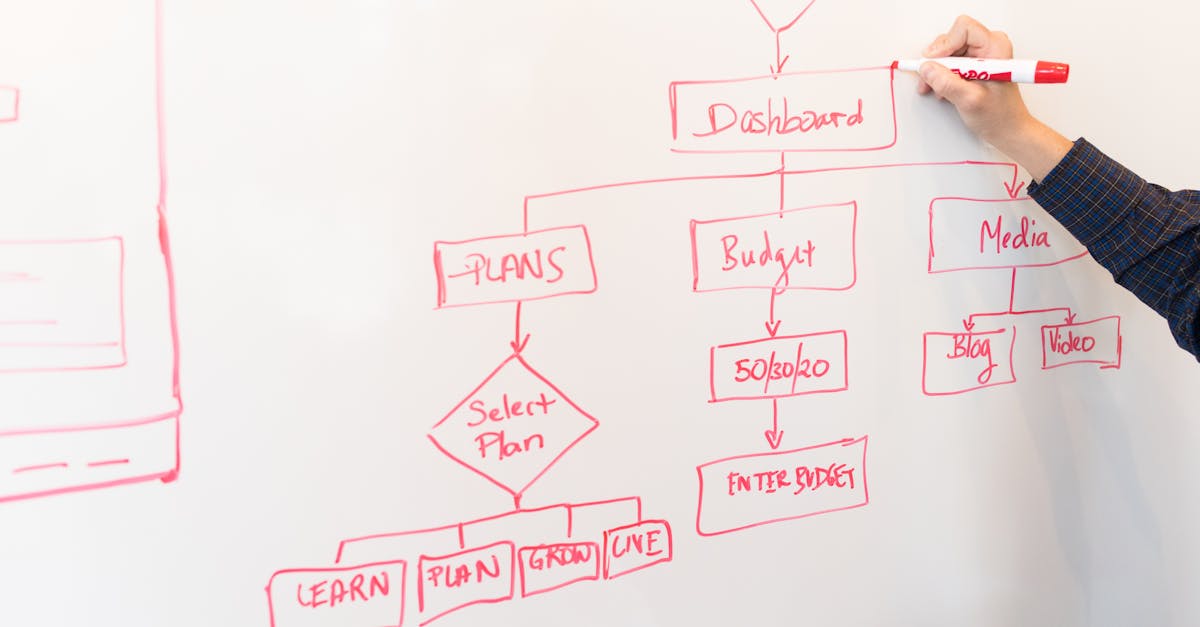
In 2026, businesses globally are grappling with an automation paradox: while no-code tools promise quick wins, they often falter at scale, and traditional cron jobs lack the resilience needed for critical operations. The shift towards integrating complex AI agents and multi-stage processes demands a more sophisticated approach. This is where dedicated workflow orchestration becomes indispensable.
TL;DR: Workflow orchestration provides a robust, code-first framework for building scalable, fault-tolerant automation workflows that go far beyond simple no-code integrations or basic background tasks. It's essential for managing complex business logic, integrating AI agents, and ensuring reliability, retries, and state management in distributed systems.
Key takeaways
- No-code automation and simple cron jobs often introduce significant reliability and scalability bottlenecks for critical business processes.
- Workflow orchestration frameworks (like Temporal, Inngest) provide explicit state management, built-in retries, and observability for long-running, distributed tasks.
- Implementing developer-grade orchestration allows for complex logic, human-in-the-loop steps, and seamless integration of AI agents within reliable workflows.
- Strategic adoption of custom workflow orchestration offers significant ROI by reducing manual errors, improving processing speed, and ensuring data consistency.
- While powerful, full orchestration isn't always necessary; simple tasks might still benefit from no-code solutions.
The Automation Paradox: When Simple Tools Hit Their Limit

Many organizations begin their automation journey with no-code platforms like Zapier or Make. These tools are fantastic for quickly connecting SaaS applications and automating straightforward, event-driven tasks. However, as business processes grow in complexity, volume, or criticality, their limitations quickly become apparent.
We've seen this firsthand. In a recent client engagement, a rapidly growing startup relied on Zapier for crucial lead routing and data synchronization between their CRM, marketing automation platform, and a custom sales tool. Initially, it worked. But as lead volume surged, the workflows began to hit rate limits, encounter intermittent API failures, and struggle with complex conditional logic. Debugging became a nightmare of nested if/else statements across multiple Zaps, leading to missed leads and frustrated sales teams. The lack of explicit state management meant partial failures were common, requiring manual intervention to reconcile data.
Similarly, relying on traditional cron jobs for background tasks introduces its own set of problems. Cron is excellent for scheduled execution, but it offers no built-in mechanisms for:
- Retries with backoff: What happens if an API call fails temporarily? Cron just gives up.
- State management: How do you recover a long-running job if the server crashes mid-process?
- Observability: How do you easily see the status of all running jobs, or if one is stuck?
- Distributed execution: Scaling beyond a single machine becomes an operational burden.
These challenges highlight a critical gap: the need for a system that can reliably manage complex, stateful, and often long-running operations across distributed environments. This is precisely the domain of workflow orchestration.
What is Workflow Orchestration? A Developer's Perspective
Workflow orchestration is the systematic coordination and management of multiple tasks or services to achieve a larger business objective. Unlike simple task queues that process individual, discrete jobs, an orchestration system understands the entire sequence of steps, manages their dependencies, handles failures gracefully, and maintains the overall state of the process.
Think of it as a conductor leading an orchestra. Each musician (task) plays their part, but the conductor ensures they play in the correct order, at the right time, and can step in if a musician misses a cue. Key characteristics of modern workflow orchestration include:
- Durability: Workflows persist their state, surviving system crashes or network outages.
- Fault Tolerance: Automatic retries with exponential backoff, timeouts, and error handling.
- Visibility: Centralized logging and monitoring of workflow progress and failures.
- Scalability: Designed to run thousands or millions of concurrent workflows across distributed systems.
- Flexibility: The ability to define complex branching logic, parallel execution, and human-in-the-loop interactions.
At its core, orchestration systems define workflows as code. This allows developers to leverage familiar programming constructs, version control, testing frameworks, and CI/CD pipelines for their automation logic. This shift from visual builders to code-first definitions brings engineering rigor to business process automation.
Architecting Robust Workflows: Code-First Solutions
When no-code platforms and simple background jobs fall short, developer-grade workflow orchestration platforms step in. Tools like Temporal, Inngest, and BullMQ offer robust primitives for building resilient, scalable automation.
Let's consider a simplified comparison:
| Feature | No-Code Platforms (Zapier/Make) | Task Queues (BullMQ/Redis Queue) | Workflow Orchestration (Temporal/Inngest) |
|---|---|---|---|
| Complexity Handling | Simple linear/conditional flows | Independent, stateless tasks | Complex, stateful, long-running processes |
| State Management | Implicit, often external to workflow | None (tasks are stateless) | Explicitly managed & durable |
| Retry Logic | Basic, often limited | Manual implementation per task | Automatic, configurable, exponential backoff |
| Observability | Limited logs, visual flow only | Basic queue metrics | Full workflow history, tracing, status |
| Error Handling | Basic, often stops flow | Manual, within task code | Advanced, compensation logic, custom handlers |
| Scalability | Rate limits, vendor constraints | Good for independent tasks | Designed for massive concurrency & distribution |
| Developer Experience | Visual, low-code | Code-first, focused on tasks | Code-first, focused on end-to-end workflows |
| Cost Model | Per-task/per-automation | Infrastructure + development | Infrastructure + development, often usage-based |
For building complex, stateful workflows, Temporal and Inngest are leading solutions. Temporal, for instance, provides a robust framework where workflows are simply functions that execute reliably, even if the underlying worker processes crash. Inngest offers a similar developer-friendly experience, often with a focus on event-driven architectures.
Here's a minimal example of what a durable workflow might look like using a conceptual orchestration SDK (similar to Temporal or Inngest):
import { workflow, activity } from '@orchestrator/sdk';

interface OrderProcessingInput {
  orderId: string;
  customerId: string;
  itemIds: string[];
  totalAmount: number;
}

// Define activities (atomic, retryable operations)
const processPayment = activity(async (customerId: string, amount: number) => {
  // Simulate API call to payment gateway
  console.log(`Processing payment for ${customerId}: $${amount}`);
  if (Math.random() < 0.1) throw new Error("Payment failed temporarily");
  return { transactionId: `txn-${Date.now()}` };
});

const sendConfirmationEmail = activity(async (orderId: string, customerId: string) => {
  // Simulate email service call
  console.log(`Sending confirmation for order ${orderId} to ${customerId}`);
  return { success: true };
});

const updateInventory = activity(async (itemIds: string[]) => {
  // Simulate inventory service call
  console.log(`Updating inventory for items: ${itemIds.join(', ')}`);
  return { success: true };
});

// Define the main workflow
export const orderProcessingWorkflow = workflow(async (input: OrderProcessingInput) => {
  const { orderId, customerId, itemIds, totalAmount } = input;

  console.log(`Starting order processing for order ${orderId}`);

  try {
    const paymentResult = await processPayment(customerId, totalAmount);
    await updateInventory(itemIds);
    await sendConfirmationEmail(orderId, customerId);

    console.log(`Order ${orderId} successfully processed. Transaction: ${paymentResult.transactionId}`);
    return { status: 'completed', transactionId: paymentResult.transactionId };
  } catch (error: any) {
    console.error(`Order ${orderId} failed: ${error.message}`);
    // Here, you could implement compensation logic, e.g., refund payment
    return { status: 'failed', error: error.message };
  }
});
This TypeScript example illustrates how activities are defined as individual, retryable units, and the workflow orchestrates their execution. If processPayment fails, the orchestration system automatically retries it based on configured policies, ensuring the entire process is robust.
Integrating AI Agents & Complex Logic
The rise of AI agents and large language models (LLMs) adds another layer of complexity to business automation. Integrating LLM steps into a workflow means dealing with potential latency, non-deterministic outputs, and the need for human validation. Workflow orchestration is perfectly suited for this challenge.
Consider an AI-powered document processing workflow:
- Document Ingestion: A webhook triggers the workflow when a new document is uploaded.
- OCR & Data Extraction: An activity sends the document to an OCR service, then an LLM agent extracts key fields (e.g., invoice number, vendor, amount).
- Human-in-the-Loop Validation: If the LLM's confidence score is below a threshold, the workflow pauses and sends a task to a human validator via an internal portal.
- Conditional Routing: Based on validation, the workflow routes the data to different systems (e.g., ERP, CRM).
- Archiving: Finally, the processed document is archived, and a confirmation is sent.
Each of these steps can be an independent activity, and the orchestration system ensures that the entire sequence executes reliably, handling retries for API calls, waiting for human input, and managing state across potentially long-running interactions. This is crucial for building reliable AI development services.
On a production rollout we shipped, our team measured the impact of proper idempotency for an automated invoicing system. Before, intermittent network issues or duplicate webhook deliveries sometimes led to double-processing of invoices. By implementing an X-Idempotency-Key HTTP header in our API requests and a unique constraint on this key in our Postgres database, we eliminated duplicate payments entirely. The orchestration layer ensured that if a retry occurred, the payment gateway would safely ignore the duplicate request, referencing the Idempotency-Key HTTP Header specification.
Real-World ROI & When to Build vs. Buy
The return on investment (ROI) from implementing robust workflow orchestration can be substantial, especially for operations that are prone to manual errors, delays, or require significant human oversight. By automating these processes with code-first reliability, businesses can achieve:
- Reduced Operational Costs: Less manual intervention, fewer errors to correct.
- Improved Data Accuracy: Consistent processing, fewer reconciliation tasks.
- Faster Processing Times: Workflows execute efficiently, around the clock.
- Enhanced Compliance: Audit trails for every step of a critical process.
- Scalability: Handle increasing volumes without proportional increases in headcount.
The decision to build custom orchestration versus relying solely on SaaS tools is a Total Cost of Ownership (TCO) calculation. While initial development costs for custom solutions are higher, the long-term flexibility, lower per-transaction costs at scale, and ability to tailor to unique business logic often make it the more cost-effective choice for enterprises and fast-growing startups. Krapton offers custom software services to help clients navigate this decision and build bespoke solutions.
When NOT to Embrace Full Orchestration
While powerful, full-fledged workflow orchestration isn't a silver bullet. For simple, low-volume, non-critical tasks—like sending a welcome email after a form submission or syncing two basic fields between SaaS tools—no-code platforms remain an excellent, cost-effective choice. The operational overhead and development complexity of a dedicated orchestration system would be overkill in such scenarios. Always evaluate the trade-off between simplicity and the required reliability, scale, and customizability.
FAQ
What's the difference between workflow orchestration and a task queue?
A task queue (like RabbitMQ or BullMQ) processes individual, often stateless jobs. Workflow orchestration, conversely, manages the entire lifecycle of a multi-step, stateful process, including dependencies, retries, and error handling across multiple tasks.
Can I self-host workflow orchestration tools?
Yes, tools like Temporal offer open-source components that can be self-hosted on your infrastructure. This provides maximum control and data residency, though it requires significant DevOps expertise to manage. Cloud-hosted options are also available, balancing control with ease of use.
How does workflow orchestration handle failures?
Modern orchestration systems are designed for fault tolerance. They typically employ automatic retries with exponential backoff, timeouts, and compensation logic. If a worker fails, the workflow state is preserved, and execution can resume from the last successful step on another worker.
What role does AI play in modern workflow orchestration?
AI agents and LLMs can be integrated as activities within a larger workflow. Orchestration ensures these AI-powered steps are reliable, handle their non-deterministic nature, and can incorporate human review for high-stakes decisions, making AI automation robust and trustworthy.
Automate Your Operations with Krapton
Scaling your business demands more than ad-hoc automation; it requires a strategic approach to workflow orchestration. At Krapton, our engineering team specializes in architecting and implementing robust, developer-grade automation solutions that propel startups and enterprises forward. From migrating off brittle no-code setups to building complex, AI-powered workflows, we deliver systems that are reliable, scalable, and tailored to your unique operational needs. Stop firefighting manual processes and unlock true efficiency. We're ready to tackle your most challenging automation problems.
Book a free automation consult with Krapton today and discover how we can transform your operations.
Krapton Engineering
The Krapton Engineering team comprises principal-level software engineers and automation specialists who have designed and shipped high-scale, fault-tolerant workflow orchestration systems for global startups and enterprises, replacing manual operations with robust code-first solutions for over a decade.